



A merchant emails their team every Sunday night asking the same question: what should we discount this week? Sitewide 15% off went out three weeks ago. The email list is starting to ignore it. Margins are down, and nobody can say for sure whether the promotion actually earned its keep or just gave away money on orders that would have happened anyway.
This is what happens when "run a promotion" becomes the default strategy instead of one choice among several. Bundles, BOGO, free gifts, and volume discounts all raise average order value, but they do it through completely different mechanics, and picking the wrong one for the moment is how brands end up training customers to wait for the next markdown instead of building real order value.
This guide breaks down when to use each of the four (plus a fifth worth knowing), what the data actually says about their impact, how real Shopify brands have used them, and how to run all of them from one app without burning a sitewide discount code every time.
Let’s dive right in!
Why "Just Run a Sale" Stops Working
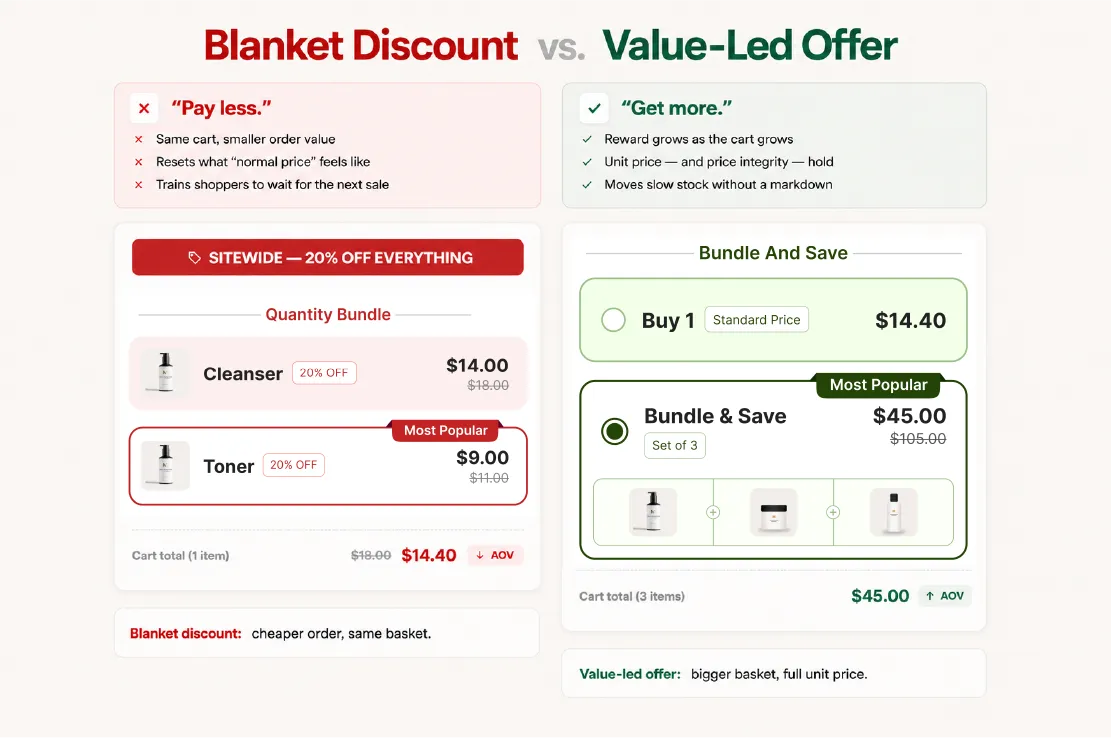
Sitewide percentage-off discounts are the easiest promotion to launch and the fastest to backfire. They cut margin on every single order, including the ones that would have converted at full price anyway. And the more often a brand runs them, the less they work.
In a recent Retail TouchPoints survey, 43% of shoppers said there are simply too many sales to keep track of anymore, and analysts point to promotion fatigue as a real reason sale-driven sales units are flattening even as promotion frequency rises. Separate research puts the number of consumers who actively delay a purchase to wait for a discount at more than 60%.
The margin math is just as unforgiving.
Ecommerce brands lose an average of 12 to 18% of revenue to discounting, and that rate climbs to 20 to 30% in categories like fashion. Moderate discounts in the 10 to 25% range can lift conversion by 25 to 35%, which looks great in a dashboard, but the same research shows that discounting frequent, full-price buyers mostly trains your best customers to wait for the next code instead of buying now. Stack a welcome discount with an email code and free shipping, and a single order's margin can shrink by 30 to 40%.
None of this means promotions are the problem. It means blanket discounts are a blunt tool for a job that needs precision. Bundles, BOGO offers, free gifts, and volume discounts all move AOV up without training customers to distrust your price tag, because each one adds value instead of subtracting it.
A discount says "pay less." A bundle, a free gift, or a quantity break says "get more." That framing difference is why these four mechanics consistently outperform blanket discounts on both AOV and long-term brand equity.
The Five Levers of Shopify Promotions
Before going deep on each one, it helps to see how they differ mechanically:
Promotion Type | What It Rewards | Typical AOV Lift | Best Funnel Stage |
Volume Discounts (Quantity Breaks) | Buying more units of one product | 20-30% | Repeat/consumable purchases |
BOGO Offers | Buying a second item (same or paired) | Varies by depth; strong on trial | Acquisition, category expansion |
Free Gift With Purchase | Reaching a spend or quantity threshold | 18-30% | Cart-stage conversion |
Bundle & Save | Buying a curated set instead of one item | 20-30%, up to 2.7x on kit revenue | Discovery and routine-building |
Subscribe & Save | Committing to recurring delivery | Increases LTV more than single-order AOV | Post-purchase and consumables |
Each row solves a different problem. The rest of this guide walks through when each one is the right call, what it looks like when a real brand gets it right, and how to set it up on a Shopify store without writing a line of code.
1. Volume Discounts: Buy More, Save More
When to Use It
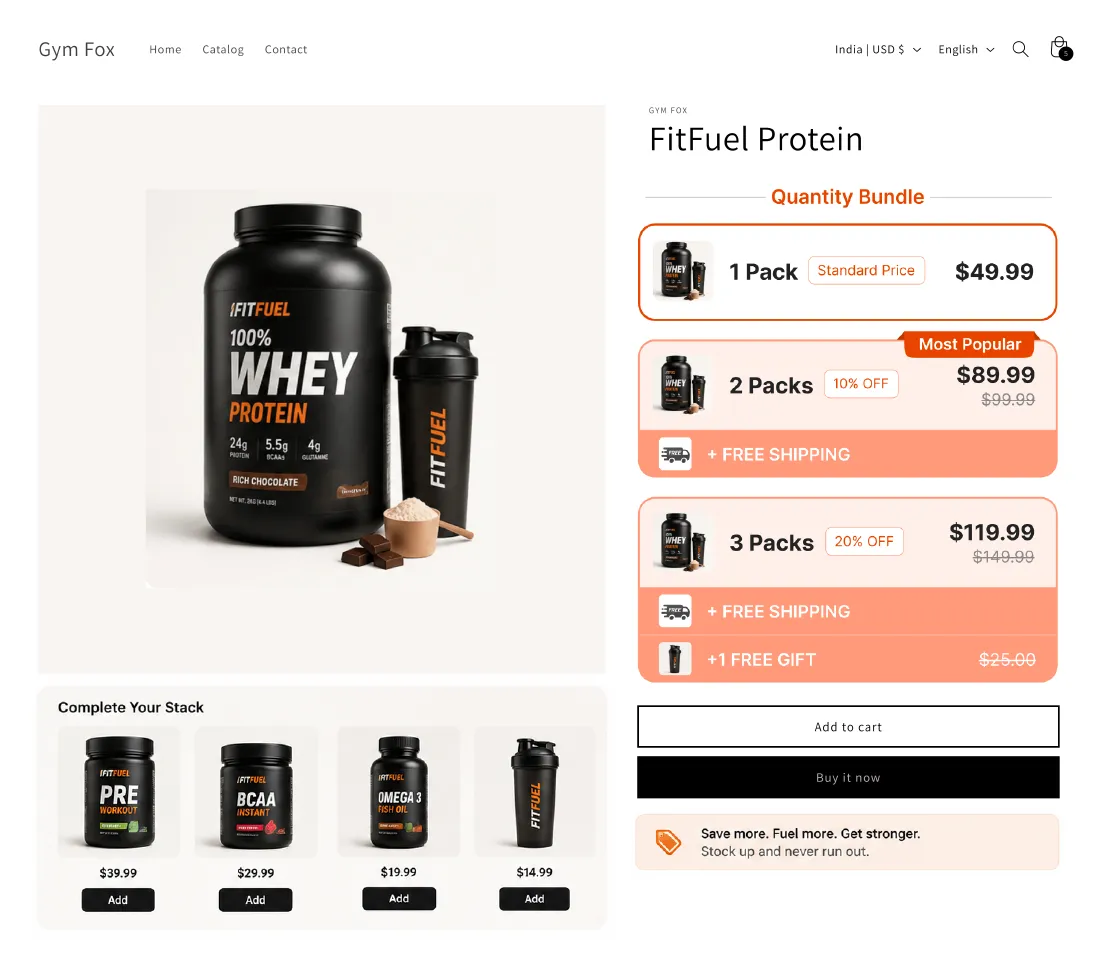
Shopify volume discounts, often called quantity breaks or Buy More Save More offers, reward a customer for buying more units of the same product. "Buy 2, save 10%. Buy 3, save 15%." The mechanic is simple, and it works best on products people naturally buy in multiples: supplements, skincare, candles, socks, coffee, anything consumable or gifted in sets.
This is the right lever when the goal is moving more inventory of a single SKU or increasing purchase quantity on a product with a repeat-buy cycle. It is the wrong lever for a first-time visitor who came to buy exactly one thing and has no reason to need three.
Real Example: Macy's and The INKEY List
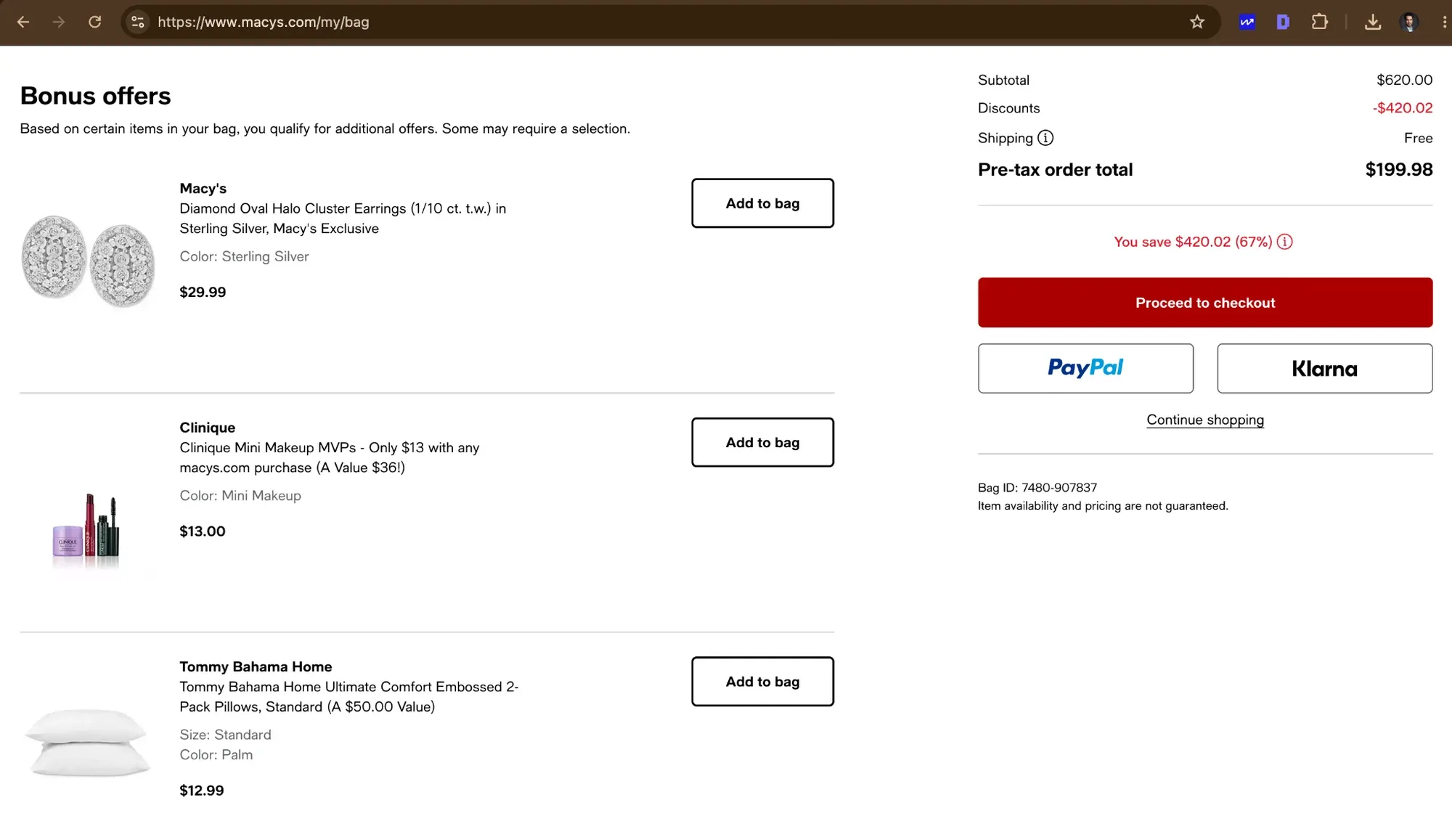
Quantity-based Buy More Save More offers are common enough in mainstream retail that Macy's has run them as headline promotional events, structuring markdowns so that when a user adds more items from the Bonus offers list, it unlocks a deeper discount rather than applying one flat percentage across the board. The mechanic rewards basket size directly instead of just cutting the price.
Check the cost of these earrings when purchased alone.
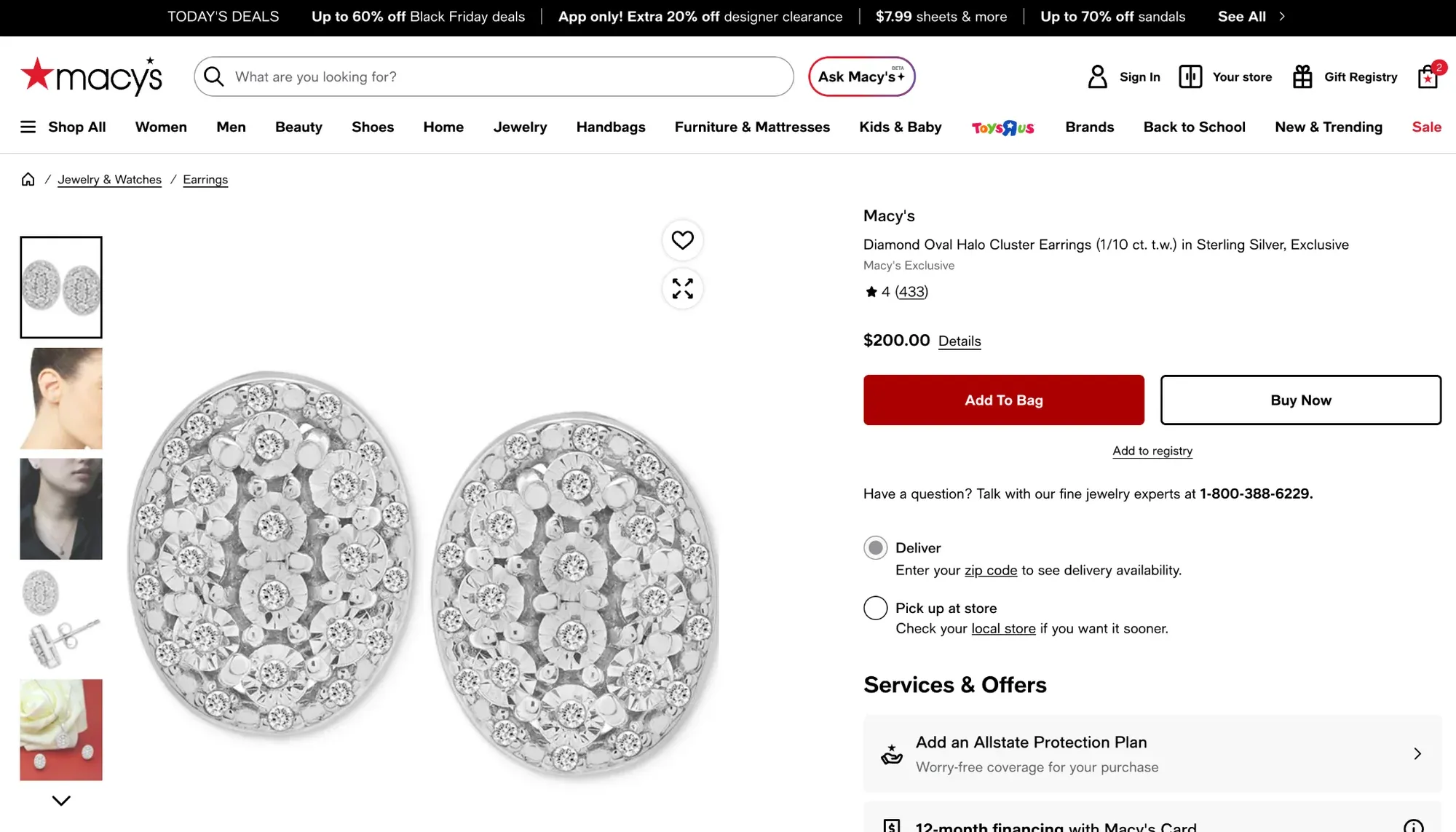
But when the same set of earrings are purchased via bonus offers, you get it under $30. So Macy’s is basically selling more and discounting less.
Skincare brand The INKEY List runs a version of this built around routine-building rather than raw quantity. Shoppers have to add at least two products before any bundle discount unlocks, and the discount deepens as they add more, which nudges a single-cleanser shopper toward a full routine instead of a one-item cart. Go-To Skincare uses a similar "Build Your Own Bundle" structure, framed around completing a routine rather than just hitting a discount threshold.
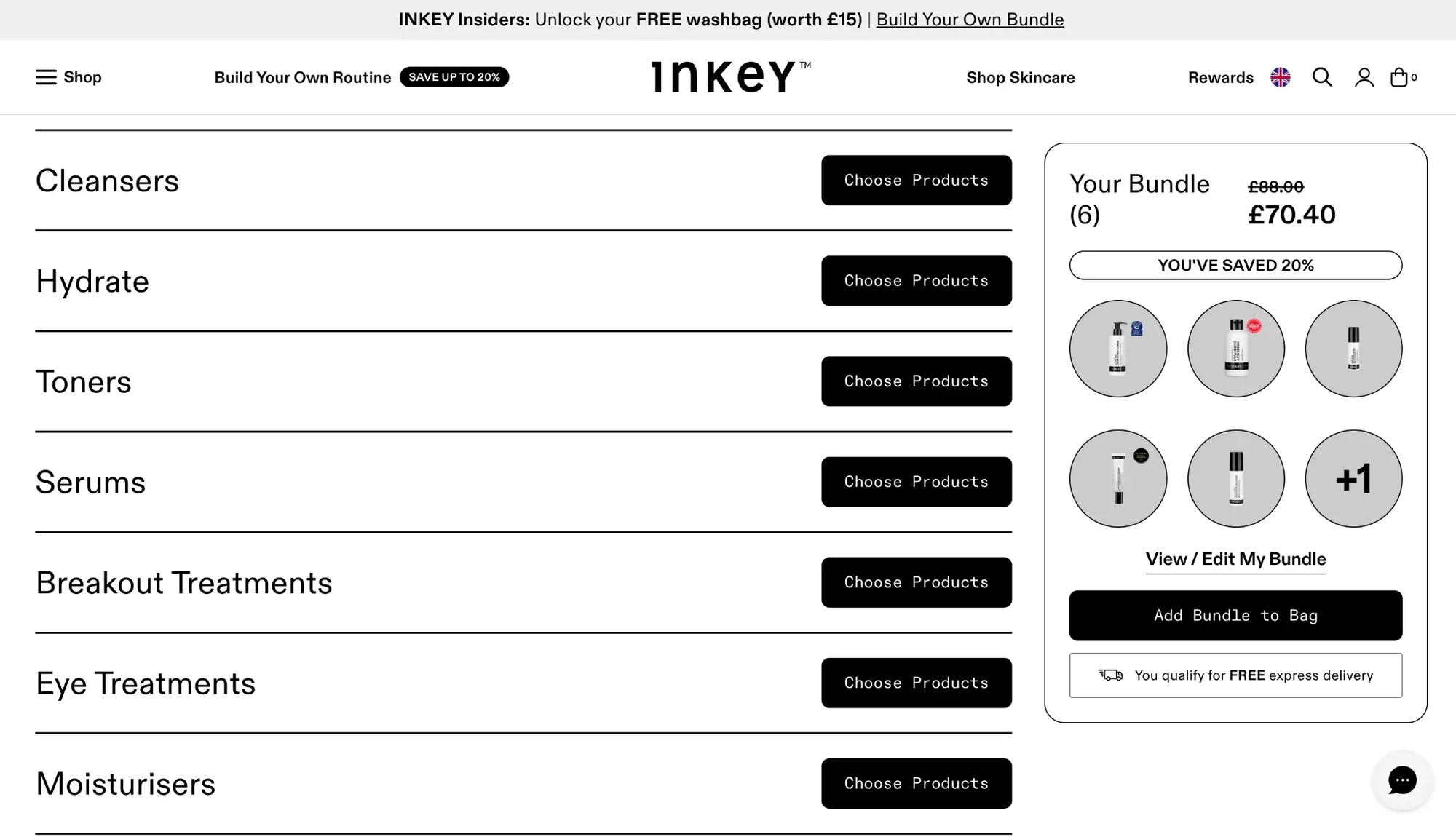
The pattern across both: the discount only exists to reward a bigger cart, not to compete on price for a single item.
How Pumper Bundles Handles It
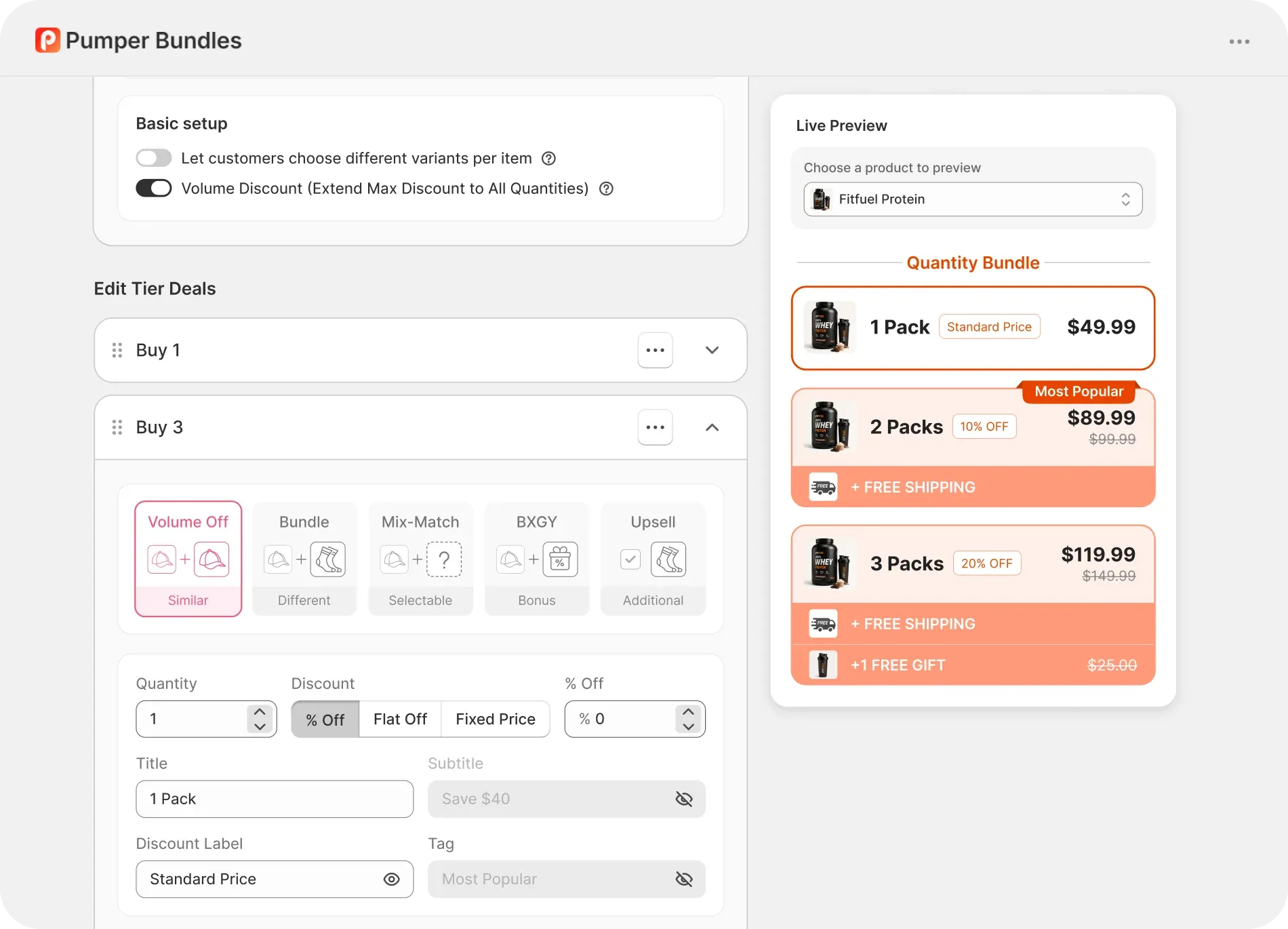
Pumper's Buy More Save More offer type lets merchants set up multiple quantity tiers, each with its own discount percentage, and the on-page widget shows every tier side by side so shoppers can compare and pick the highest-value option themselves. It's the same tiered logic The INKEY List and Macy's use, deployed through a Theme App Extension with no theme code required.
Merchants can also control whether the Quantity Breaks widget stacks with Shopify's Product, Order, or Shipping discounts, so the tiered pricing doesn't accidentally combine with a sitewide code and erase the margin the tiers were designed to protect.
2. BOGO Offers: Buy X, Get Y
When to Use It
Shopify BOGO discounts, buy one get one, is the fastest way to get a second unit into a cart. It works especially well for apparel, accessories, and any category where pairing or gifting is natural, and it's one of the strongest tools for getting a customer to try a second product they wouldn't have bought on its own.
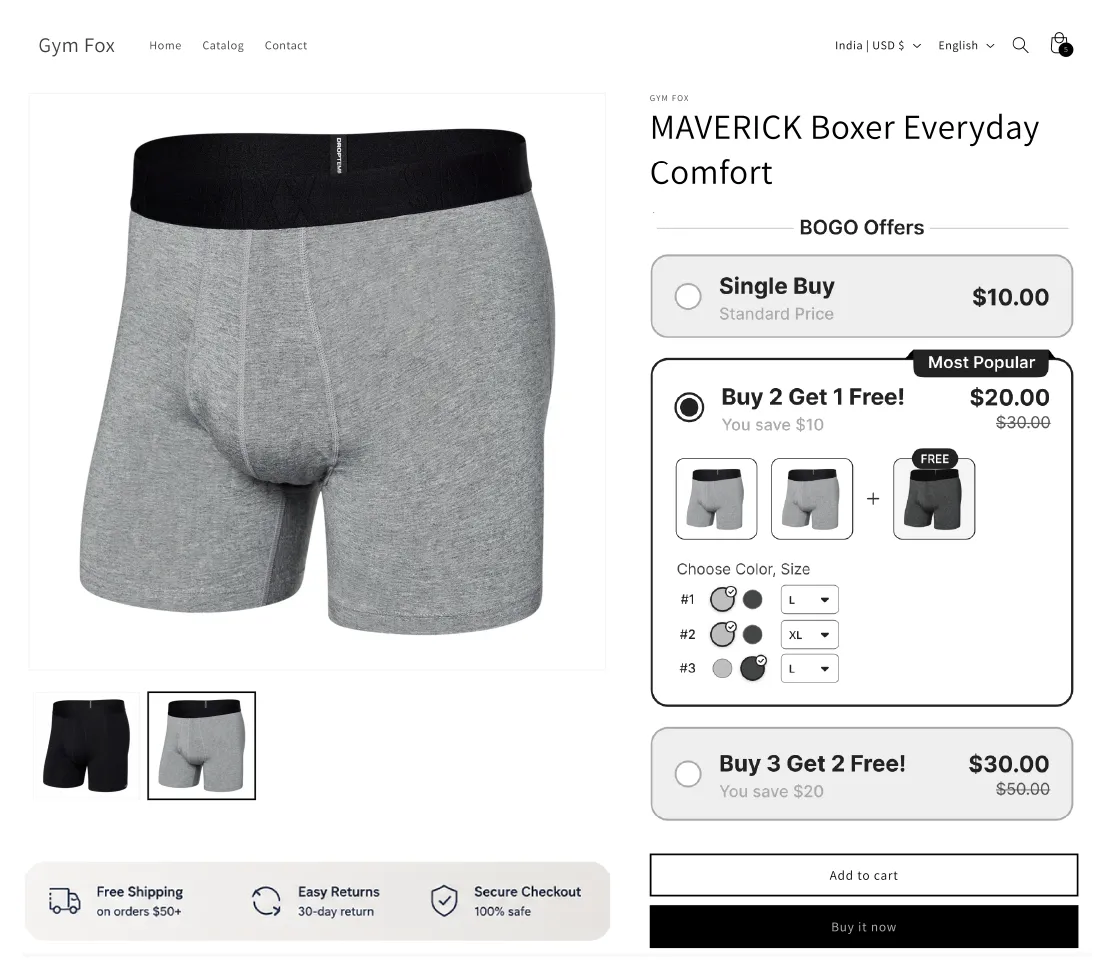
BOGO isn't one offer, it's a spectrum. Buy one get one free is the most aggressive version and works best for clearing inventory or driving a hard acquisition push. Buy one get one 50% off is gentler on margin and works well as an always-on mechanic. Buy 2 get 1 free rewards a slightly bigger basket than a straight 1-for-1. The right depth depends on the margin in the product and how much trial you're trying to buy.
Real Example: Bombas and the Vitamin Shoppe
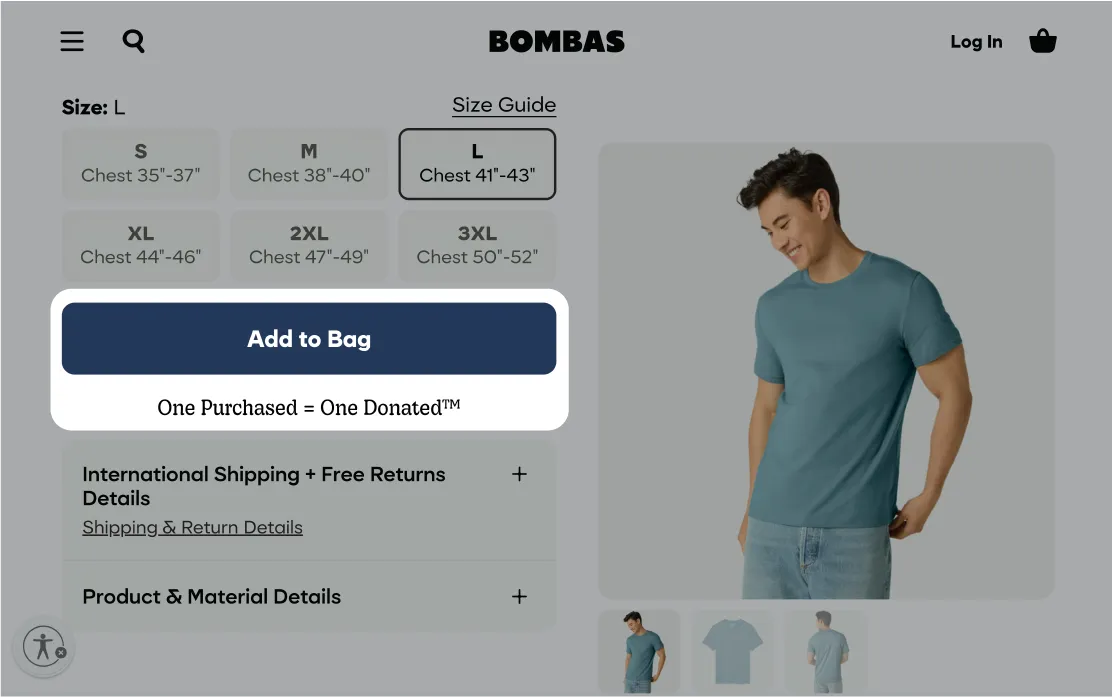
Bombas built its entire brand around a buy-one-give-one model: for every pair of socks, underwear, or t-shirt sold, one is donated to a person experiencing homelessness. The company has donated more than 150 million items and generated an estimated $325 million in revenue in 2024, growing to over $1.3 billion in lifetime sales since its Shark Tank appearance.
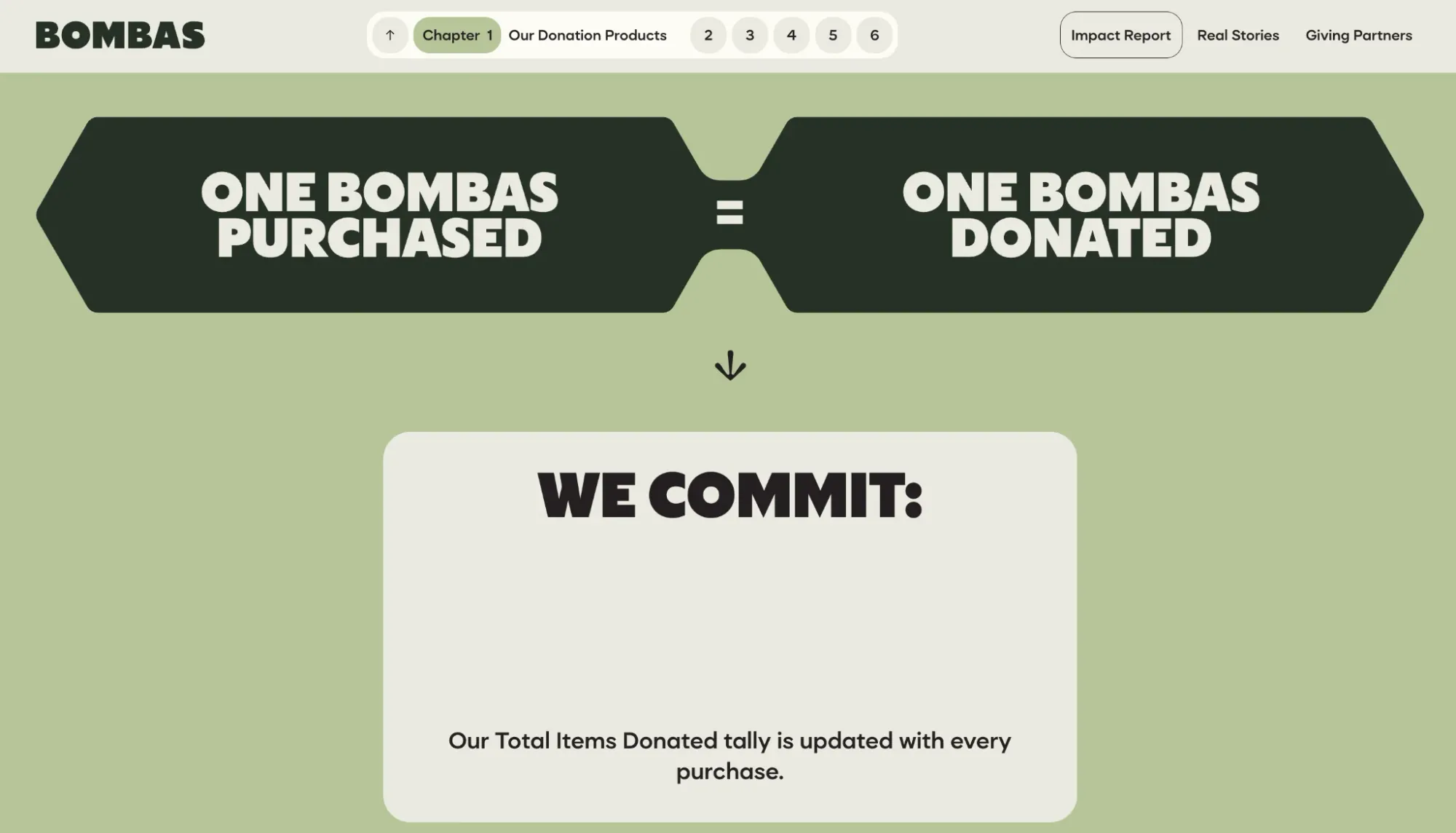
The BOGO mechanic isn't a markdown here. It's the product story, which is exactly why it's been one of the most durable promotional models in DTC history rather than a short-term traffic spike.
On the retail side, The Vitamin Shoppe and GNC both run standing "buy one get one 50% off" promotions with a mix-and-match structure: a customer can pair a protein powder they already buy with a pre-workout they've never tried, both counted toward the same BOGO deal.
That mix-and-match flexibility is what turns a BOGO offer into a trial mechanic instead of just a bulk discount on one item, letting the retailer introduce customers to new SKUs at a lower perceived risk.
How Pumper Bundles Handles It
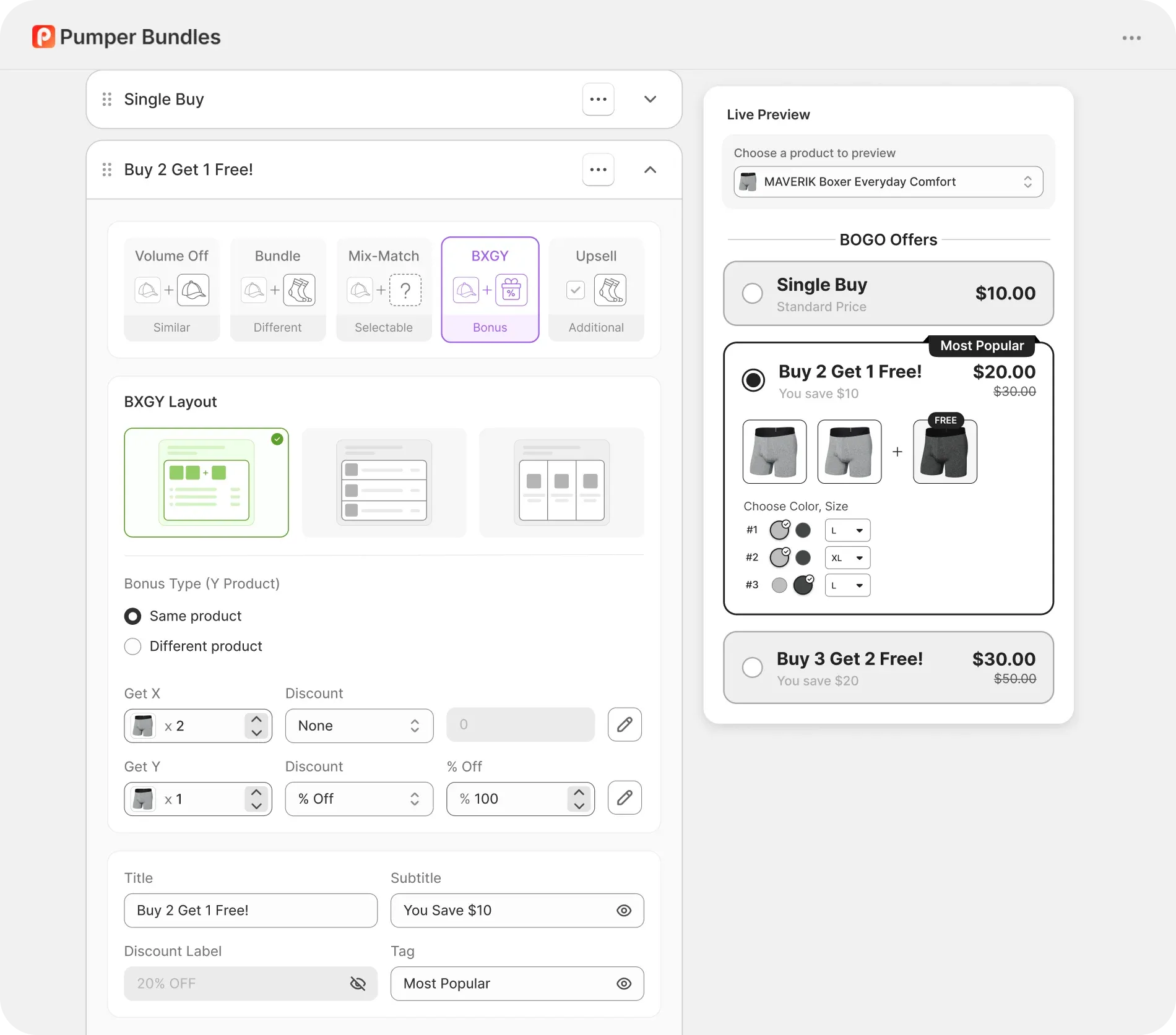
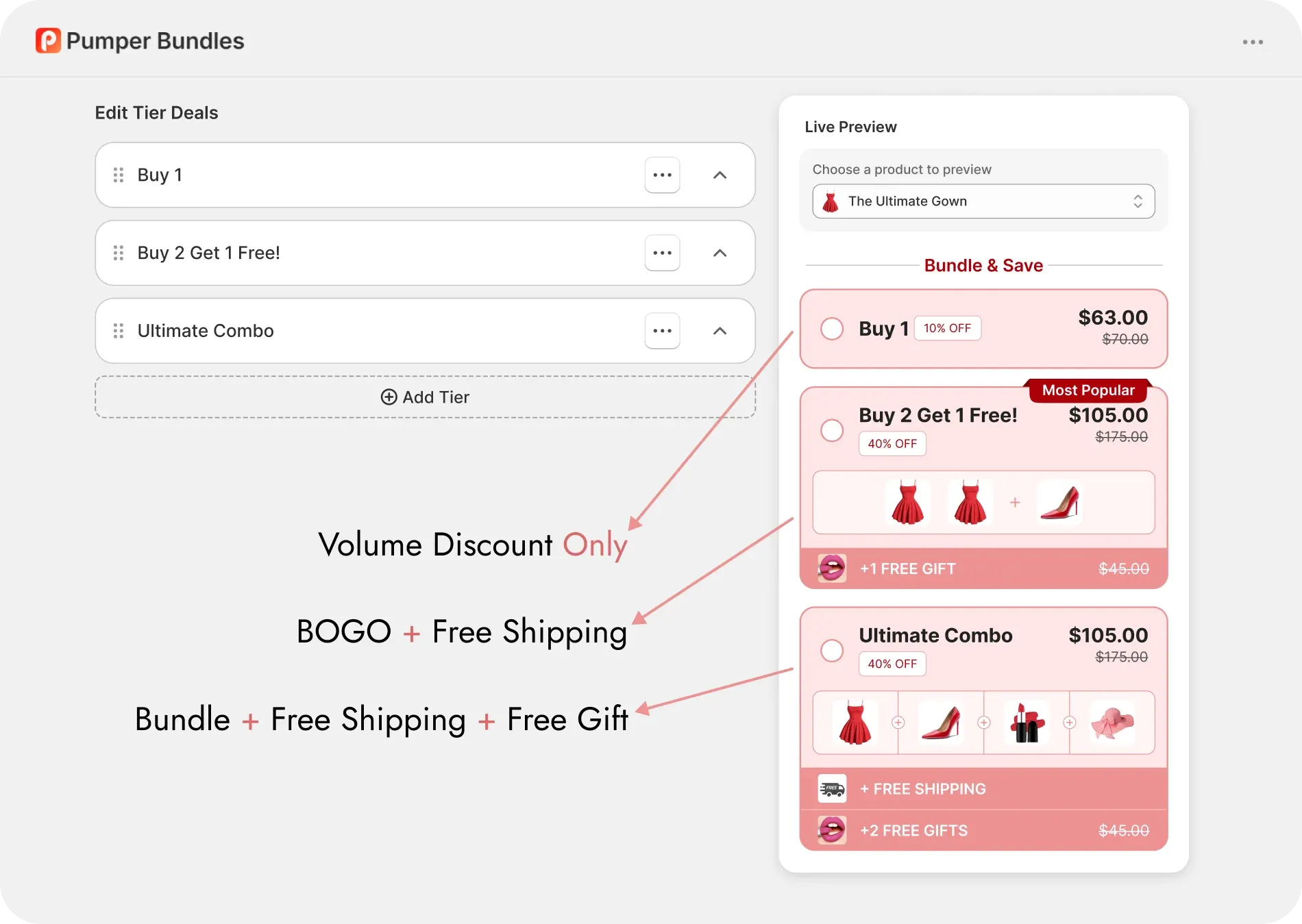
Pumper's BOGO Offers let merchants define Buy X Get Y rules across the same product or across different products, structured as free, percentage off, or a Buy 2 Get 2 tier, with the widget presenting the deal as clear tier cards on the product page. Because it supports cross-product rules, a Shopify merchant can run the same mix-and-match trial mechanic The Vitamin Shoppe uses, pairing a bestseller with a newer SKU, without needing a developer to wire up the discount logic.
3. Free Gift With Purchase: Add Value Instead of Subtracting Price
When to Use It
A free gift with purchase (GWP) rewards a customer for reaching a spending or quantity threshold with a bonus item instead of a lower price. Psychologically, this is a different transaction than a discount. A percentage off feels like paying less. A free gift feels like getting more, and that framing consistently outperforms an equivalent discount.
GWP campaigns typically beat equivalent discount offers by 15 to 25% in conversion rate, and free gift offers increase AOV by 18 to 30% on average. The lift compounds when the gift is tiered: merchants running multi-tier GWP campaigns, where a bigger spend unlocks a better gift, see 25 to 35% higher AOV than single-tier campaigns. Consumer research backs the underlying appeal too. Roughly 68% of shoppers say a free gift influences their purchase decision, and a separate survey found nearly 70% would consider switching brands for one.
This is the right lever at the cart stage, when a customer is close to a spend threshold and needs one more reason to cross it, and for brands that don't want to be seen discounting a premium product.
Real Example: Ulta Beauty
Ulta Beauty has run free gift promotions on purchase Rare Beauty products above $35, structured so a customer who came in for a cheaper item buys a higher margin product to claim a free gift. It's a textbook use of a free-gift mechanic to push category expansion.
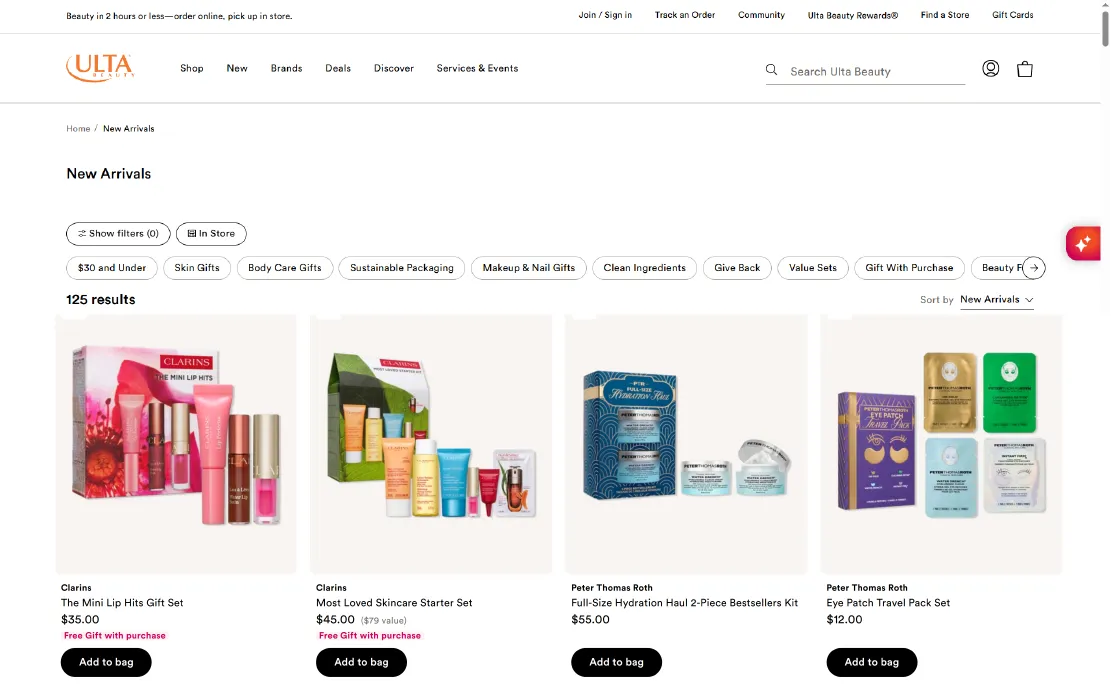
The mechanic also shows up constantly in beauty and skincare direct-to-consumer, where full-size or travel-size samples are used as the unlock reward, protecting the perceived value of the core product line while still giving the shopper a reason to add one more item.
How Pumper Bundles Handles It
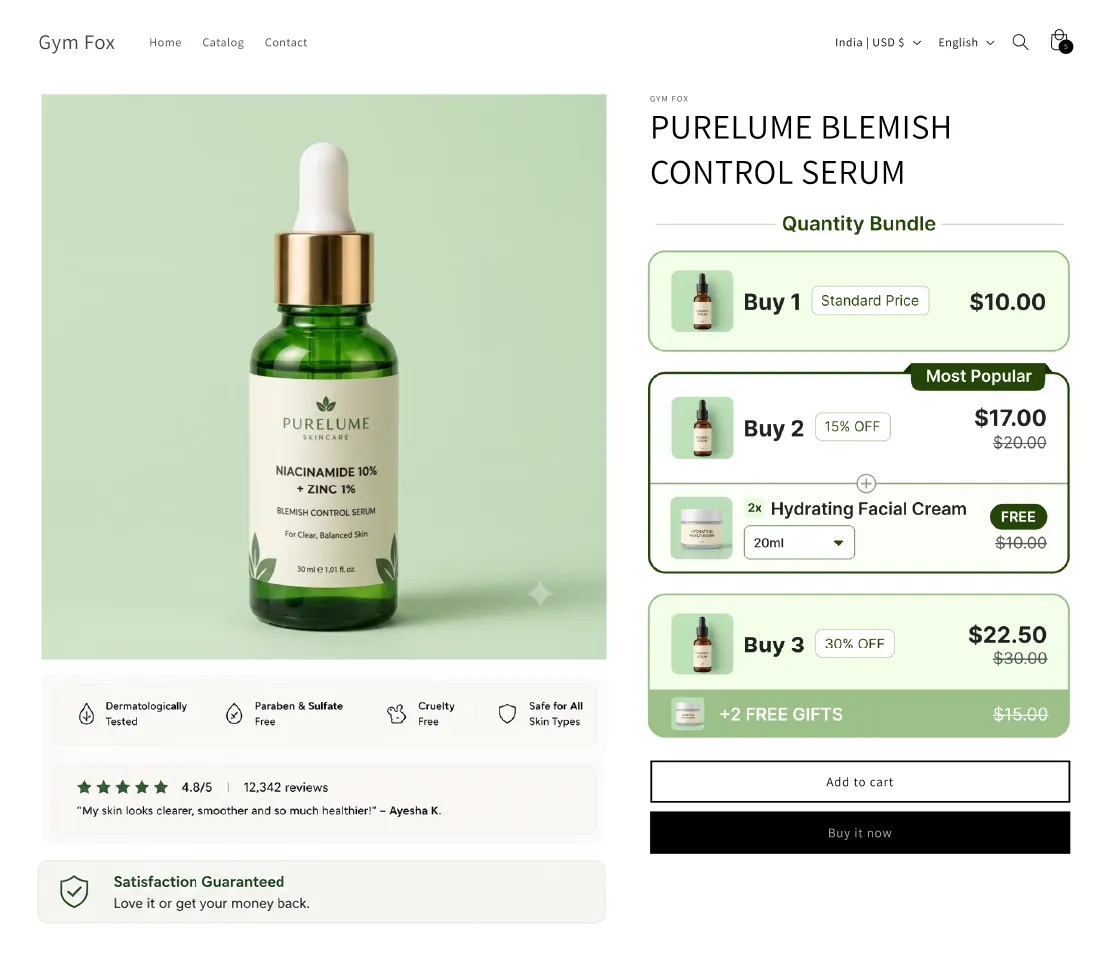
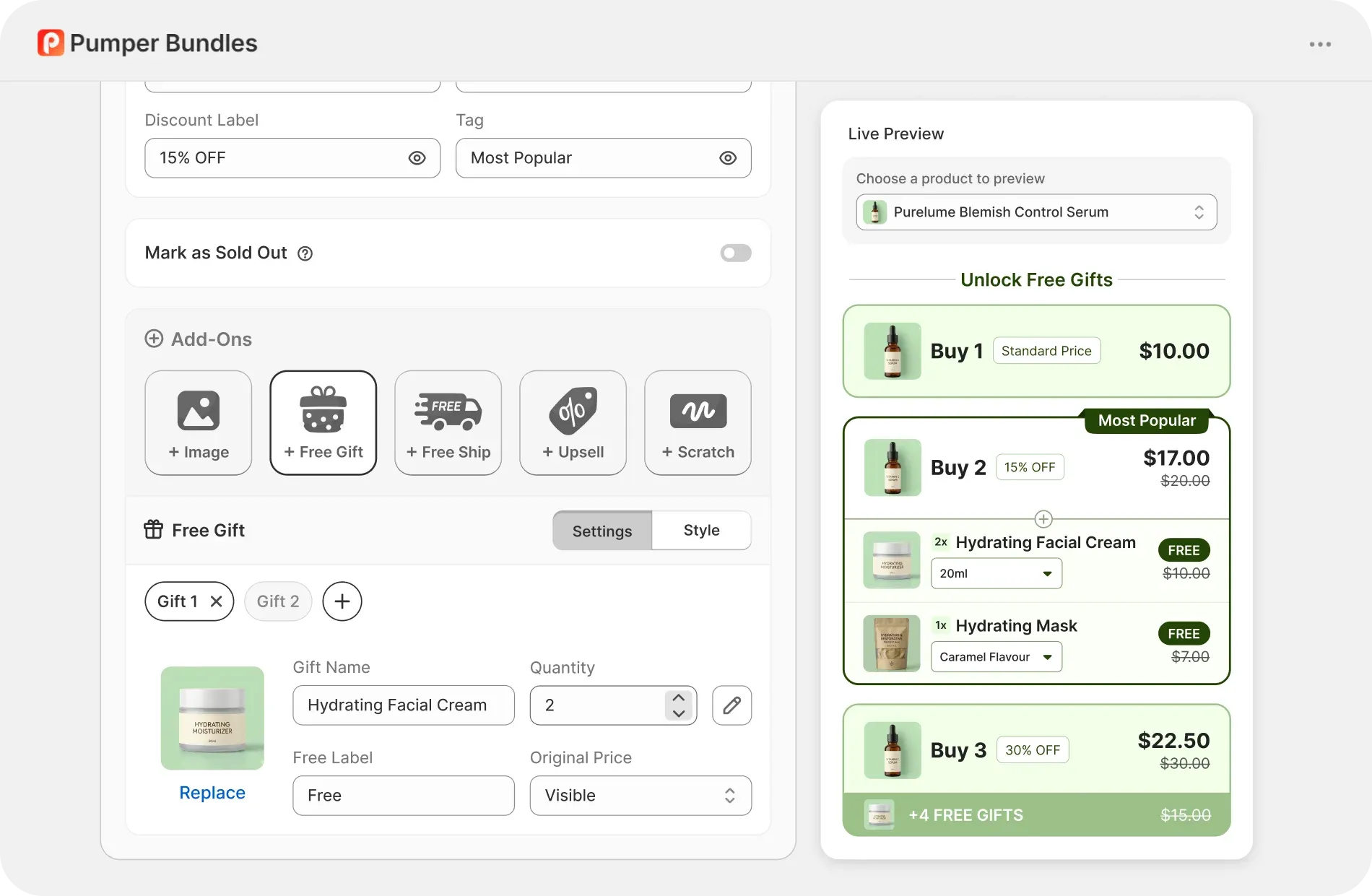
Pumper's Unlock Free Gifts offer type lets shoppers unlock a free product when they hit a spending or quantity threshold, and each tier can unlock a different gift, shown in the widget with a clear "FREE" label and the gift name. Multiple thresholds can be set up in the same offer, so a merchant can replicate the tiered structure that the GWP data shows performs 25 to 35% better than a single flat gift, all configured from the dashboard with no code.
4. Bundle & Save: Selling the Outcome, Not the SKU
When to Use It
Bundling groups complementary products into one purchase, either as a fixed set or a build-your-own selection. It works best for brands with a natural "system" of products: a skincare routine, a starter kit, a gift set, anything where owning the whole thing is more valuable to the customer than owning one piece of it.
Bundling is also the highest-leverage AOV tactic in ecommerce right now by volume of evidence. McKinsey research on bundling strategies found brands implementing them see roughly 20% sales increases and 30% profit gains, with revenue lifts of 5 to 15% and retention improving by up to 30%.
Across ecommerce more broadly, bundles are now estimated to drive up to 30% of total revenue for brands that use them well, and customers who purchase bundles show roughly 2.7x higher lifetime value than single-item buyers, because a bundle purchase signals someone thinking about a full solution rather than grabbing one item on impulse.
Real Example: rhode, HiSmile, Drunk Elephant, and Glossier
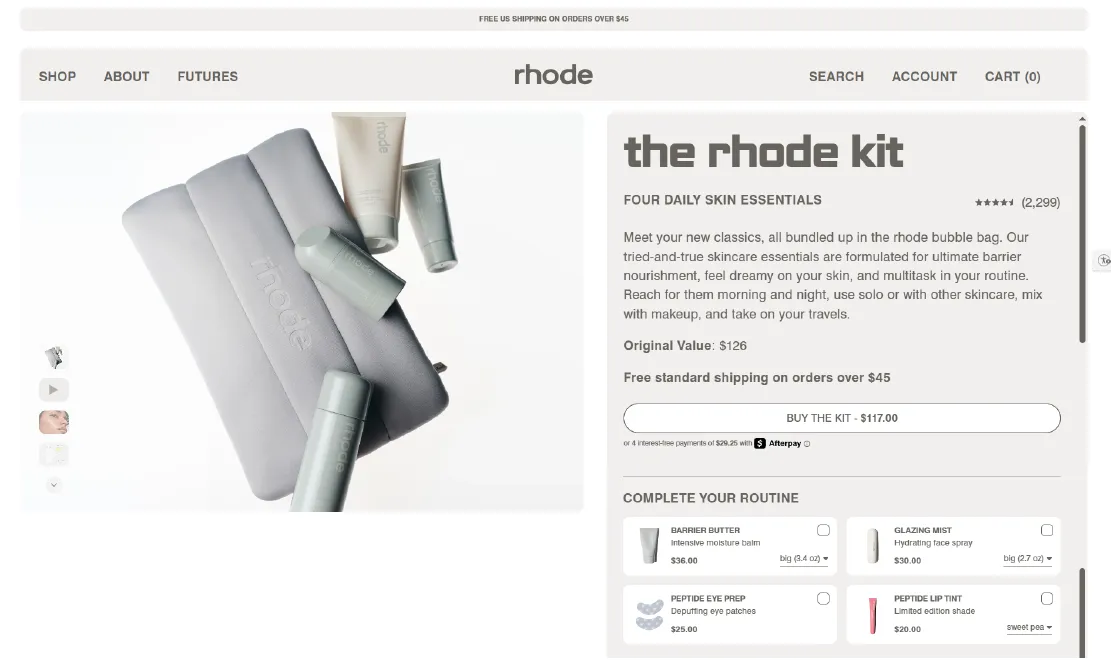
The clearest bundling case study in recent DTC history is rhode skin, Hailey Bieber's skincare brand. With only about 10 SKUs in the entire product line, rhode built curated kits around routines like "the rhode kit" or "your hydration essentials" instead of just grouping products at a discount. Kit revenue grew from $948,000 per month to $2.53 million per month, a 2.7x increase, in six months during 2025. The bundles worked because they sold an outcome, not a discount.
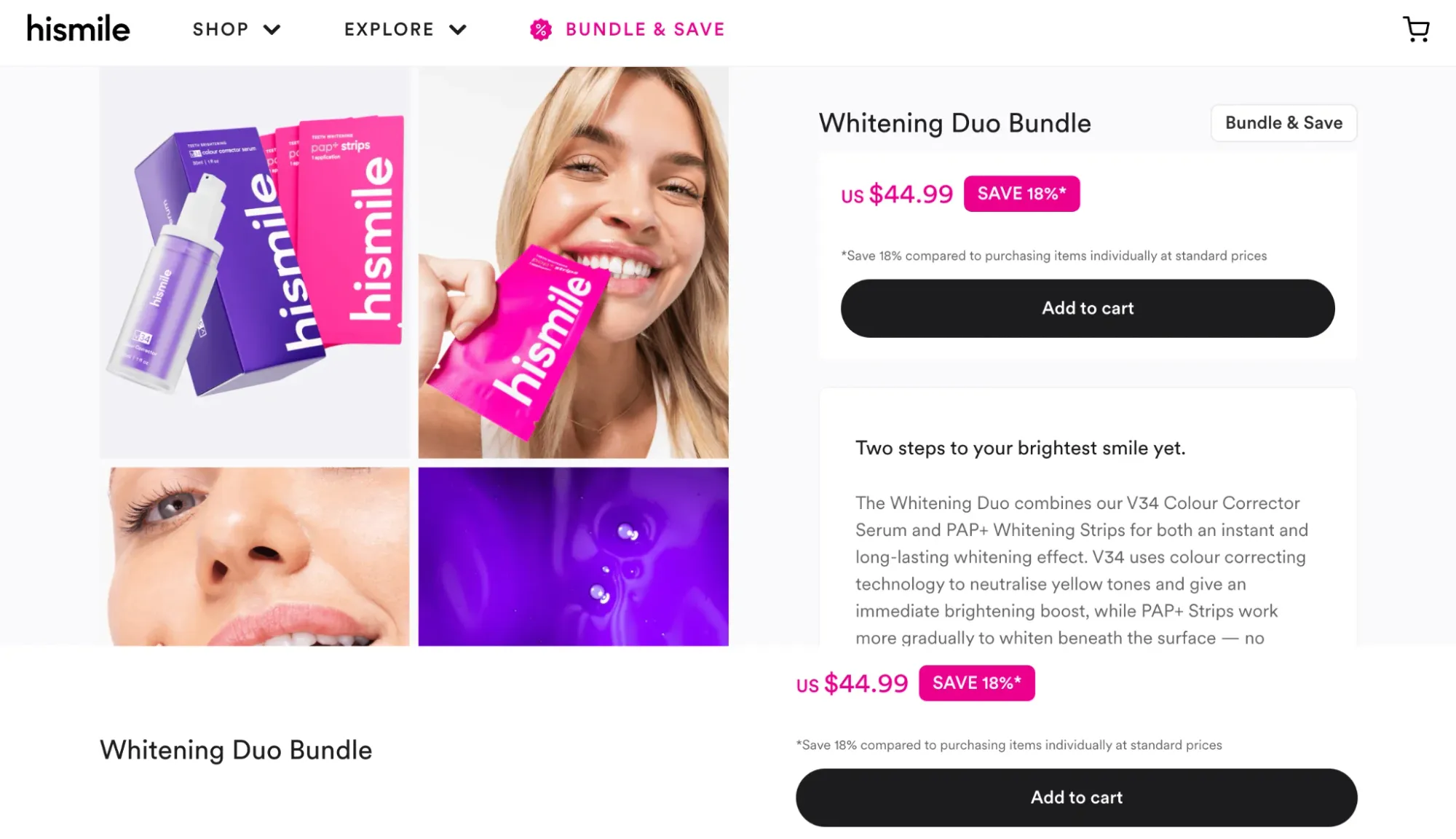
Teeth-whitening brand HiSmile has pushed this even further: over 80% of its Shopify orders consist of bundled products, with a 4x increase in average cart size, contributing to roughly $300 million in annual revenue. Bundling isn't a side tactic for HiSmile, it's the core part of their Shopify merchandising strategy.
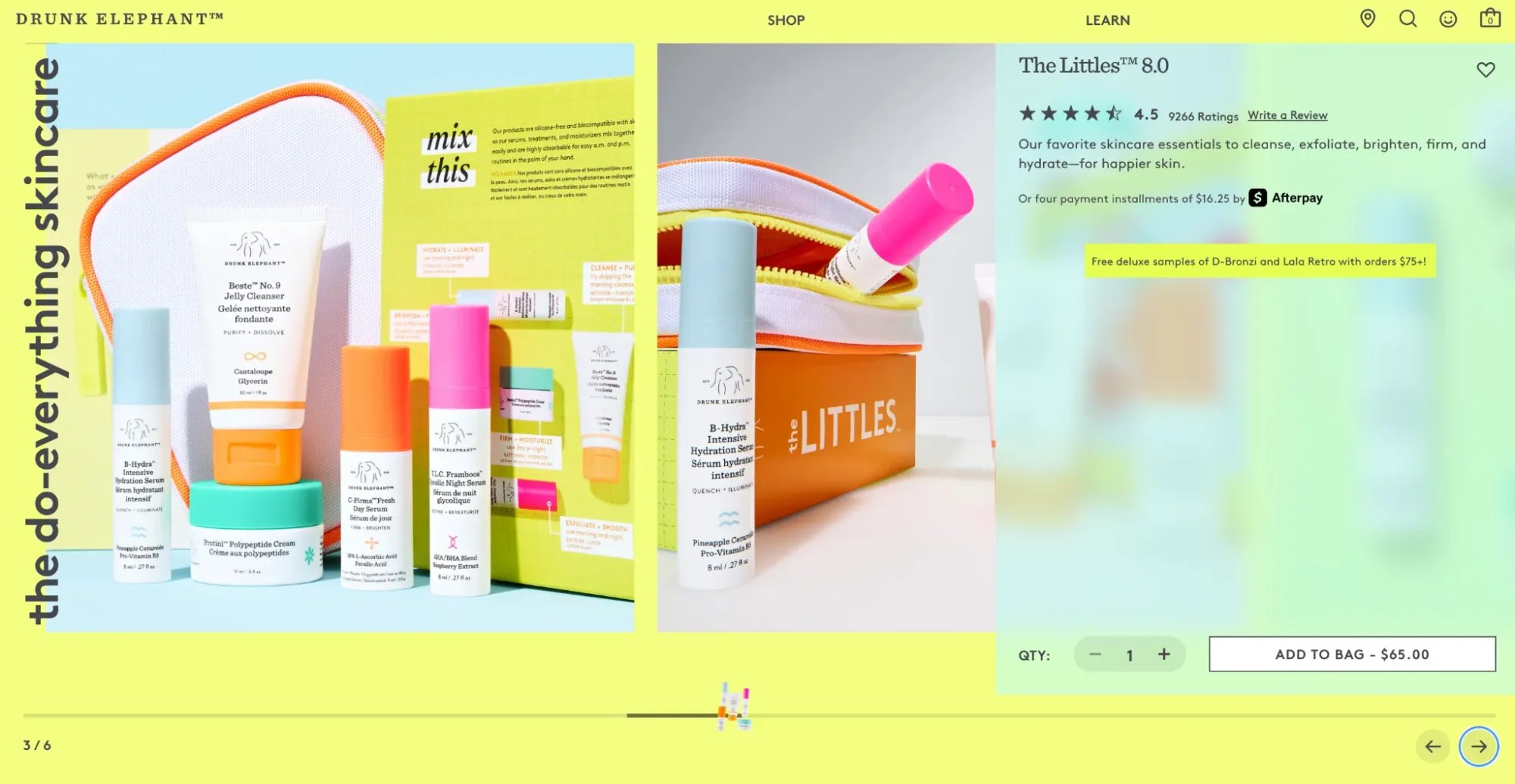
Drunk Elephant's "The Littles" discovery set, priced at $65 against a combined value of more than $108, uses mini-size bundling as a trial-to-full-size funnel, letting new customers sample a full routine at lower risk before committing to full-size purchases. And Glossier, which reported close to $300 million in 2023 sales, has made gift sets and routine bundles a core part of its merchandising strategy rather than a seasonal add-on.
How Pumper Bundles Handles It
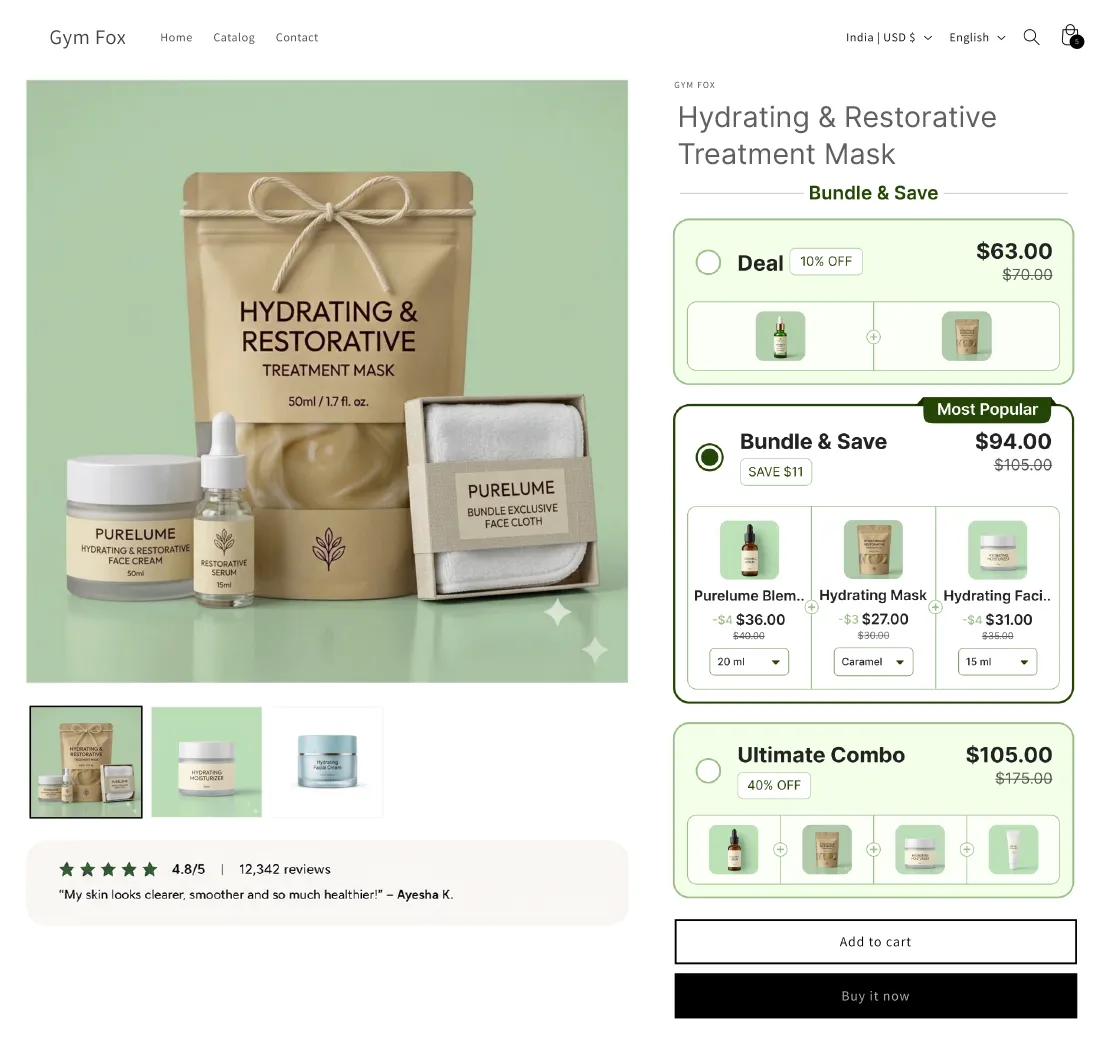
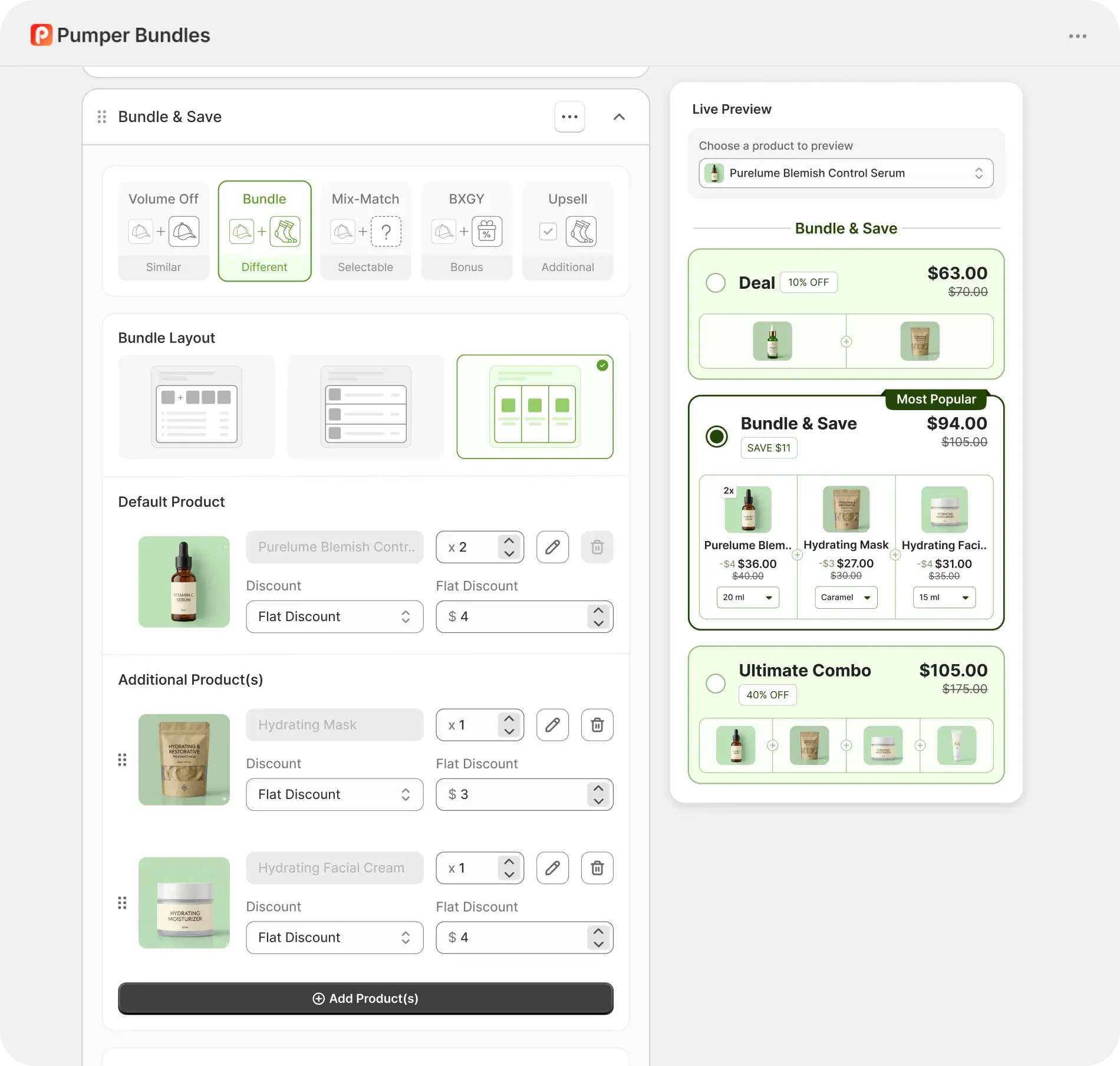
Pumper's Bundle & Save offer type supports mix-and-match bundles where customers choose which products go into a predefined structure, with a combined discount applied across the set through a "Choose Product" picker on the storefront. A merchant selling skincare could set up a routine bundle the same way The INKEY List or rhode do, letting the shopper build "their" version of the kit while the widget shows the running discount as they add items, all without a developer touching the theme.
5. Subscribe & Save: The Lever Most "AOV" Guides Skip
Subscribe & Save doesn't raise the value of a single order the way the other four do. It raises the value of the customer relationship instead, by adding a recurring purchase option alongside the one-time purchase. For consumables and repeat-buy categories, this is often a bigger lifetime revenue lever than any single-order tactic, because it turns a one-time AOV win into a recurring revenue stream.
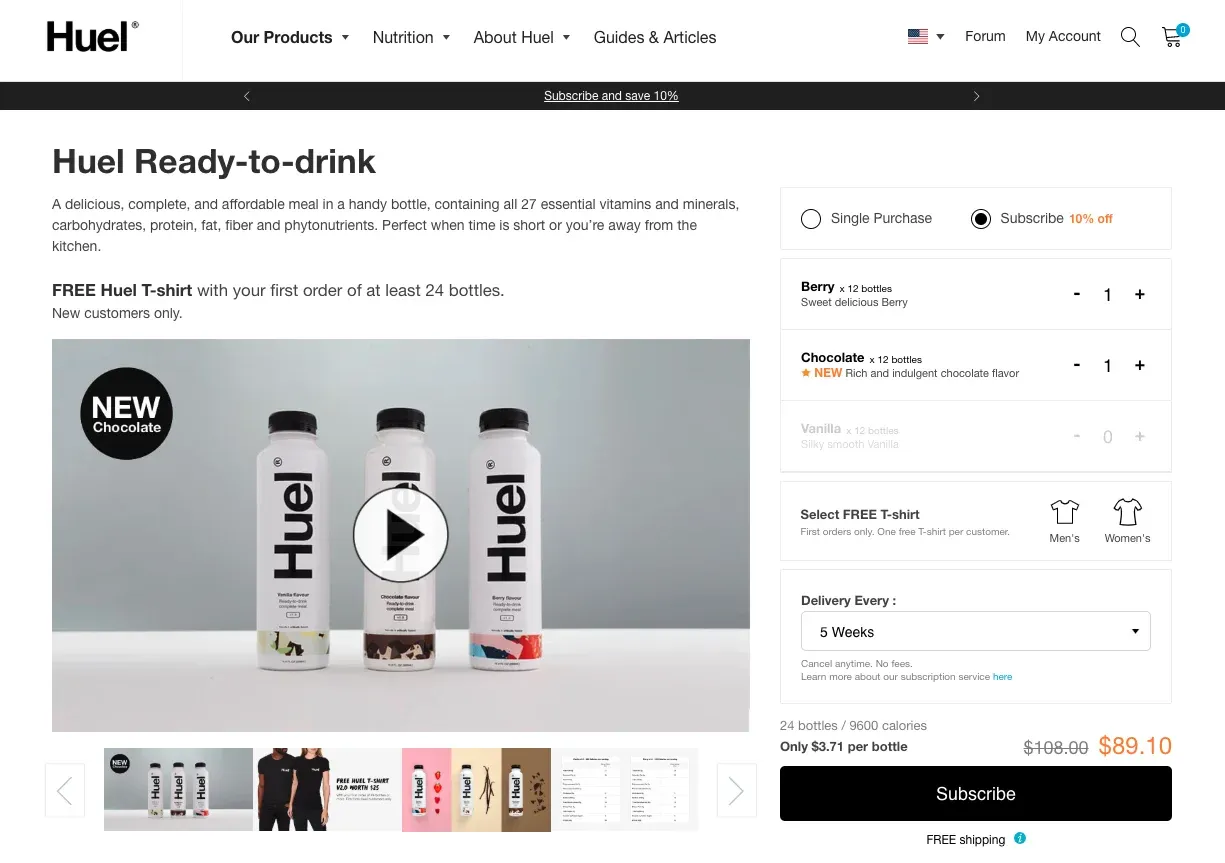
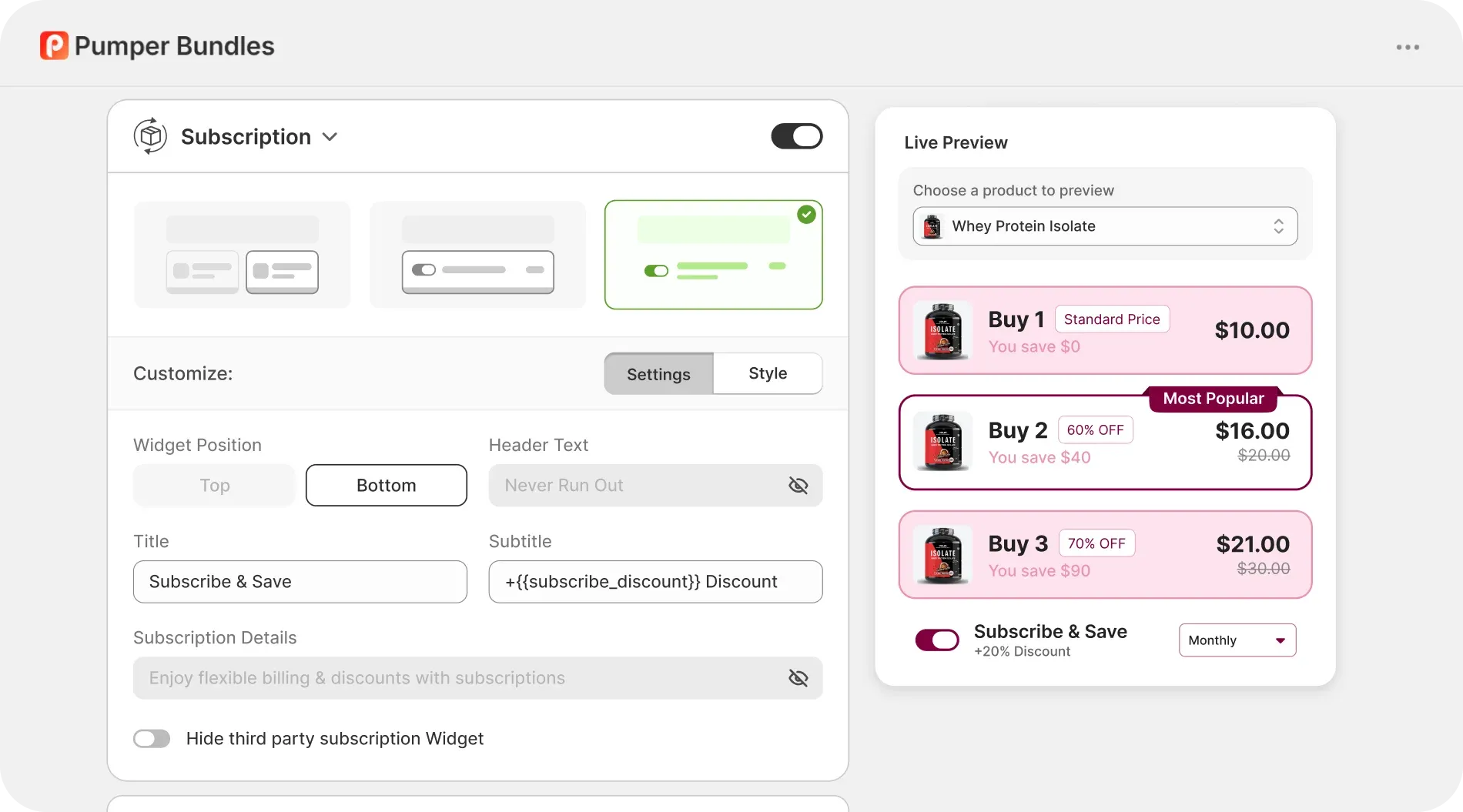
It works best layered on top of the other four rather than replacing them: a customer builds a bundle, then is offered a subscription option on that same bundle at checkout. Pumper's Subscribe & Save offer type adds exactly this, showing a "One-Time Purchase" versus "Subscribe & Save" toggle on the widget so the recurring option sits next to the one-time option instead of requiring a separate page or app.
Mistakes That Quietly Undercut Each Promotion Type
Each of these four mechanics has its own way of backfiring if it's set up carelessly. Knowing the failure mode ahead of time is cheaper than finding it in a margin report three months later.
1. Volume discounts fail when the tiers are too shallow to matter
A "buy 2, save 2%" tier gives a shopper no real reason to add a second unit. The discount needs to feel worth the extra spend at every tier, which usually means starting the first tier around 10% and stepping up from there, not starting at a token 2 or 3%.
2. BOGO fails when it's restricted to slow-moving inventory only
Shoppers notice fast when a "buy one get one" only applies to items nobody wants. That kills trust in future BOGO offers and trains the audience to check eligibility before believing any deal. Mix-and-match structures, like the ones GNC and The Vitamin Shoppe run, avoid this because the free item can be any eligible product, not a fixed dud.
3. Free gifts fail when the gift doesn't match the spend level
A $20 tote bag on a $400 order doesn't move behavior. The gift's perceived value needs to scale with the threshold, and it needs to be something the customer would actually want, not overstock the warehouse needs to clear.
4. Bundles fail when they're just a discount wearing a bundle's clothing
Grouping three random products at 10% off isn't a bundle, it's a markdown with extra steps. The bundles that perform, like rhode's routine kits, sell a complete outcome the customer couldn't easily assemble themselves. If a bundle doesn't tell a "this is your morning routine" or "this is everything you need to start" story, it won't outperform a plain discount.
Choosing the Right Promotion for the Moment
The mistake most Shopify merchants make isn't picking a bad promotion type, it's picking one promotion type and using it for everything. Match the mechanic to the goal instead:
Goal: Move more units of one SKU (consumables, gifting multiples).
Use a volume discount. It rewards quantity directly and works especially well on products with a natural repeat-buy cycle like supplements or skincare.
Goal: Get customers to try a second product.
Use BOGO. Structuring it as a mix-and-match offer, the way The Vitamin Shoppe and GNC do, turns the discount into a trial mechanic instead of just a bulk buy.
Goal: Push a cart over a specific spend threshold without cutting the shelf price.
Use a free gift with purchase. The addition-framing outperforms an equivalent percentage-off discount by 15 to 25% in conversion, and tiering the gift adds another 25 to 35% on top.
Goal: Sell a complete solution instead of a single item, or build a "system" around your catalog.
Use bundling. This is the highest-ceiling lever of the four, with brands like rhode and HiSmile showing what it looks like at scale.
Goal: Turn a one-time buyer into a repeat customer.
Layer Subscribe & Save on top of whichever of the above is already converting.
Funnel stage matters as much as product type. New-visitor traffic responds best to BOGO and bundles, since both introduce a customer to more of the catalog at once. Cart-stage traffic, people who are already committed to buying something, responds best to free gift thresholds, since the goal there is adding one more item, not starting a new consideration cycle. Repeat customers on consumables are the best fit for volume discounts and Subscribe & Save, since both reward behavior the customer was already going to repeat anyway.
Don't Let These Promotions Cannibalize Each Other
Running more than one of these at once is smart. Running them without combination rules is how a bundle discount, a BOGO offer, and a sitewide code all stack on the same order and quietly erase the margin every one of them was designed to protect.
Promo stacking, where multiple discounts combine on a single order, is one of the most common causes of margin erosion in ecommerce, and a 15% welcome code stacked with a 10% email code and free shipping can cut an order's margin by 30 to 40% on its own.
This is a settings problem, not a strategy problem. Every offer needs an explicit answer to one question: does this discount stack with Shopify's native Product, Order, and Shipping discounts, or does it stand alone?
Pumper's Combination Discounts settings expose this as three separate toggles per offer, so a merchant running a Buy More Save More tier and a sitewide sale code at the same time can decide, deliberately, whether those two should combine or whether the tier should override the sitewide code entirely.
Running All of This From One Shopify App
Every offer type covered here, quantity breaks, BOGO, free gifts, bundles, and subscriptions, is available inside Pumper Bundles as a single app, built specifically for merchants who want bigger orders without adding a developer to the payroll.
Pumper installs through Shopify's Theme App Extensions, the same mechanism Shopify itself recommends for adding storefront functionality without editing theme files. Merchants turn the app blocks on inside the theme editor, and widgets appear on product pages automatically. Every offer goes through the same flow: pick an offer type, choose a visual theme from six preset color palettes so the widget matches the store's branding without touching CSS, then configure the tiers, products, and copy.
Widget copy is translatable per offer across 11 supported languages, with an Auto Translate option for merchants selling internationally, and a per-offer analytics dashboard tracks impressions, add-to-cart rate, orders, extra revenue, and conversion rate, so a merchant running a bundle and a free gift offer side by side can see which one is actually earning its keep instead of guessing.
Billing runs through Shopify's native billing API, plans start at $0 with a 7-day free trial on paid tiers, and every plan includes cancel-anytime terms. The plans themselves are capped by extra revenue generated rather than by feature count, which means the app scales its cost with what it's actually producing for the store instead of charging more just because a merchant wants to run a fifth offer type.
Timing These Around the Sales Calendar
The mechanic matters, but so does the moment. Black Friday and Cyber Monday traffic is comparison-shopping traffic, and it responds well to BOGO and bundles because both let a store compete on total value instead of racing a competitor to the lowest price per item. Retailers like The Vitamin Shoppe lean on BOGO specifically during Black Friday early access windows for this reason, layering it with a sitewide code rather than replacing it.
Post-holiday traffic, by contrast, tends to be more price-sensitive and less browse-happy, which makes volume discounts and Subscribe & Save a better fit. A shopper restocking a consumable in January isn't looking to discover a new routine, they're looking to buy what they already use, at the best per-unit price, and lock in a recurring order so they don't have to think about it again.
Gift-giving seasons favor free gift with purchase and bundles over BOGO, since a shopper buying for someone else responds better to "spend $75, get a bonus item included" or a pre-built gift set than to a mechanic that requires them to also want a second unit for themselves. This is part of why beauty and skincare brands lean so heavily on gift sets specifically in the Q4 stretch.
None of this requires four separate apps or four separate campaigns running on different calendars. It requires turning the right offer on for the right window and turning it back off, which is the difference between a promotion calendar and a permanent sitewide markdown that never comes back down.
The Takeaway
AOV isn't one lever, it's five, and each one solves a different problem.
- Volume discounts move more units of what customers already buy repeatedly.
- BOGO gets a second product into the cart and introduces new SKUs at lower perceived risk.
- Free gifts push a cart over a threshold without touching the sticker price.
- Bundles turn a single-item purchase into a full solution, and the brands doing it best, from rhode to HiSmile, are proving it's one of the highest-ceiling levers in ecommerce right now.
- Subscribe & Save turns any of the above into a recurring relationship instead of a one-time transaction.
The merchants who get the most out of these mechanics aren't the ones running the deepest discount. They're the ones matching the right offer to the right moment in the customer's decision, and doing it without training their audience to wait for the next sale.
Pumper Bundles gives Shopify merchants all five mechanics in one no-code app, so the only real decision left is which one fits the moment, not which developer has time to build it.
Try Pumper Bundles for free today!
Frequently Asked Questions
What's the difference between a bundle and a BOGO offer?
A bundle groups multiple, usually different, products into one purchase at a combined price, often built around a routine or use case. BOGO rewards a customer with a free or discounted second unit, which can be the same product or a different one, but it's structured as a reward for a second purchase rather than a pre-packaged set. Bundles tend to work better for building a "complete solution" story; BOGO tends to work better for driving trial of a specific product.
Which promotion type increases AOV the most?
It depends on the store, but bundling generally has the highest ceiling. McKinsey's research puts bundling's revenue lift at 5 to 15% with retention gains up to 30%, and brands like rhode and HiSmile have shown 2.7x to 4x increases in bundle-driven cart size specifically. Free gift with purchase and volume discounts both land in a more moderate 18 to 30% AOV lift range, which is still well above what a blanket sitewide discount typically delivers once margin is factored in.
Can I run more than one of these promotions at the same time on Shopify?
Yes, and most established DTC brands run at least two simultaneously, like a bundle offer alongside a free gift threshold. The risk is discount stacking, where multiple offers combine on the same order and erode margin further than intended. Set explicit combination rules for each offer so merchants control whether it stacks with Shopify's Product, Order, and Shipping discounts, or stands alone.
Do I need a developer to set up bundles, BOGO, or free gifts on Shopify?
Not with a Theme App Extension-based app like Pumper Bundles. These apps inject widgets directly into product pages through Shopify's native app block system, which means merchants turn features on inside the theme editor instead of editing theme files or hiring a developer.
How do I know which promotion is actually working?
Track it at the offer level, not just the storewide AOV number. Watch impressions, add-to-cart rate, and extra revenue per offer so it's clear whether a specific bundle or gift tier is converting or just sitting on the page unnoticed. Running two offer types side by side and comparing their extra-revenue numbers is the fastest way to find out which mechanic actually fits a given product.