



You ran a sitewide sale last quarter. Units moved. The order count looked great in your Shopify dashboard. Then you checked your actual profit, and it barely budged, or worse, it dropped.
That's the trap most merchants fall into. Sales and revenue aren't the same thing, and neither is revenue the same as profit. A 20% discount can move a lot of product while quietly wiping out most of your margin on every single order.
Product bundling solves a different problem. Done right, it raises how much each customer spends per order, without training shoppers to wait for the next markdown.
In this guide, you'll learn which bundling strategies actually move the profit needle, see real numbers behind each one, and walk away with a framework for building bundles that grow revenue instead of just moving inventory.
Why More Sales Doesn't Always Mean More Revenue
Sales volume and revenue growth get treated as the same goal. They aren't. You can sell more units this month and still end the quarter with less money in the bank than last quarter, if the units you sold came at a steep discount.
Revenue is the number that reflects what customers actually paid you. Profit is what's left after costs. A bundling strategy built around genuine added value protects both. A discount-driven "strategy" protects neither, because it only ever moves one lever: price.
1. The Discount Trap: How Deep Cuts Quietly Kill Margin
Here's the math most merchants skip. On a product with a 40% gross margin, a 20% discount doesn't cost you 20% of your profit. It costs you roughly half. Discounts come straight off the top line while your cost of goods, shipping, and fulfillment stay exactly the same, so the cut lands entirely on margin.
A store with a 30% gross margin that runs a 20% discount is left with roughly 10% margin, cutting profitability by two-thirds on every discounted order. To make the same profit dollars, that store now has to sell three times the volume. Most merchants never run that math before hitting "publish" on a sitewide sale.
2. What "Revenue-Positive" Bundling Actually Means
A revenue-positive bundle increases what the customer pays in total, even if each item inside the bundle is a little cheaper than buying it alone. The shopper who was going to spend $40 on one product now spends $70 on three, because the bundle made that decision feel obvious and worth it.
That's the entire difference between bundling and discounting. A discount reduces the price of what someone was already going to buy. A good bundle increases the size of the purchase itself. One shrinks your revenue per transaction. The other grows it.
What Product Bundling Really Is (And Isn't)
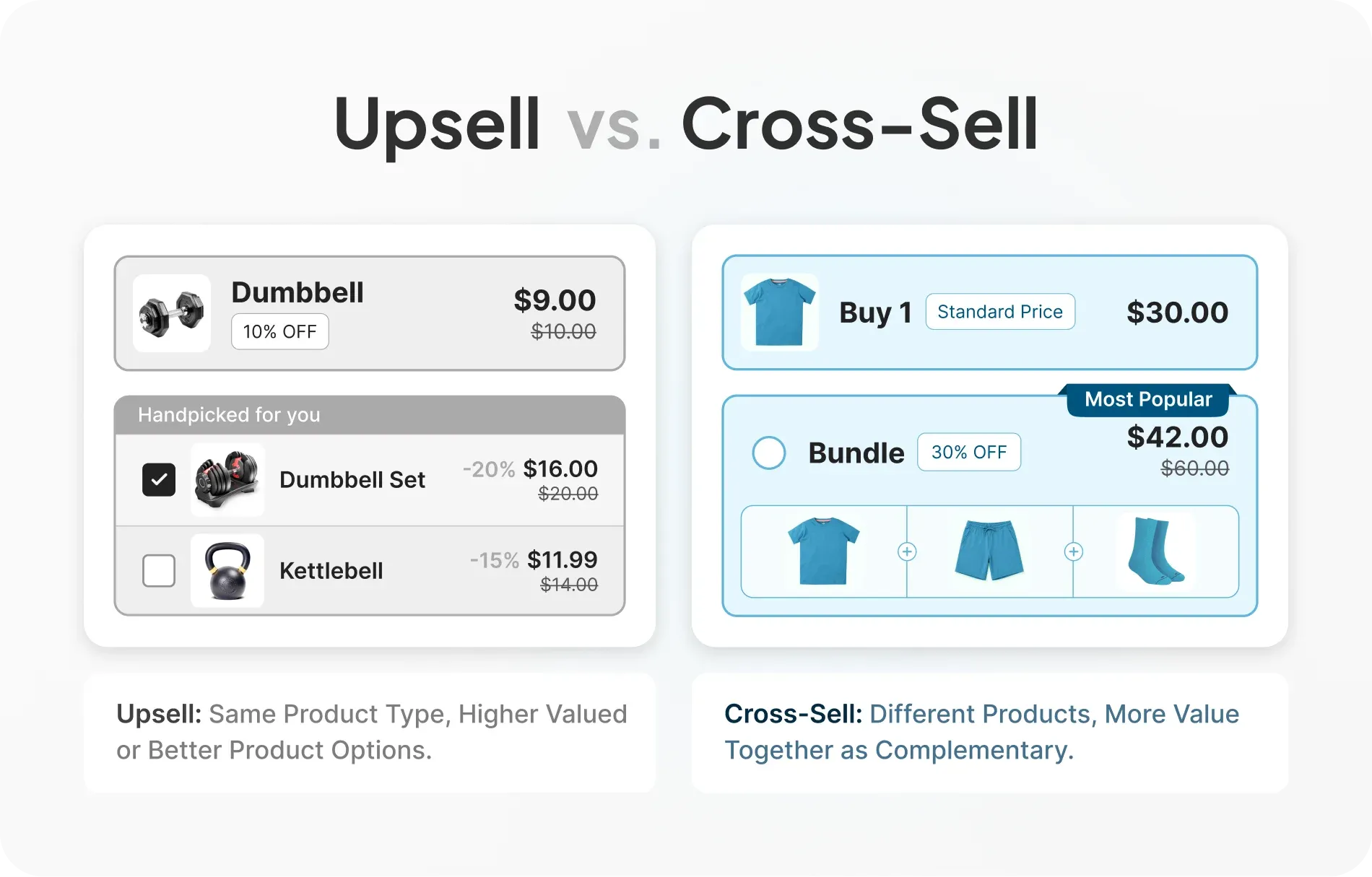
Shopify Product Bundling is the practice of packaging two or more products together, usually at a combined price that's more attractive than buying each item separately, but structured so the store still comes out ahead per order. It's not a blanket price cut. It's a purchase decision redesign.
The mechanism matters more than the discount percentage. A 15% bundle discount on three items can generate more total revenue per order than a 25% discount on one item, because the customer is buying three things instead of one.
Pure Bundling vs. Mixed Bundling
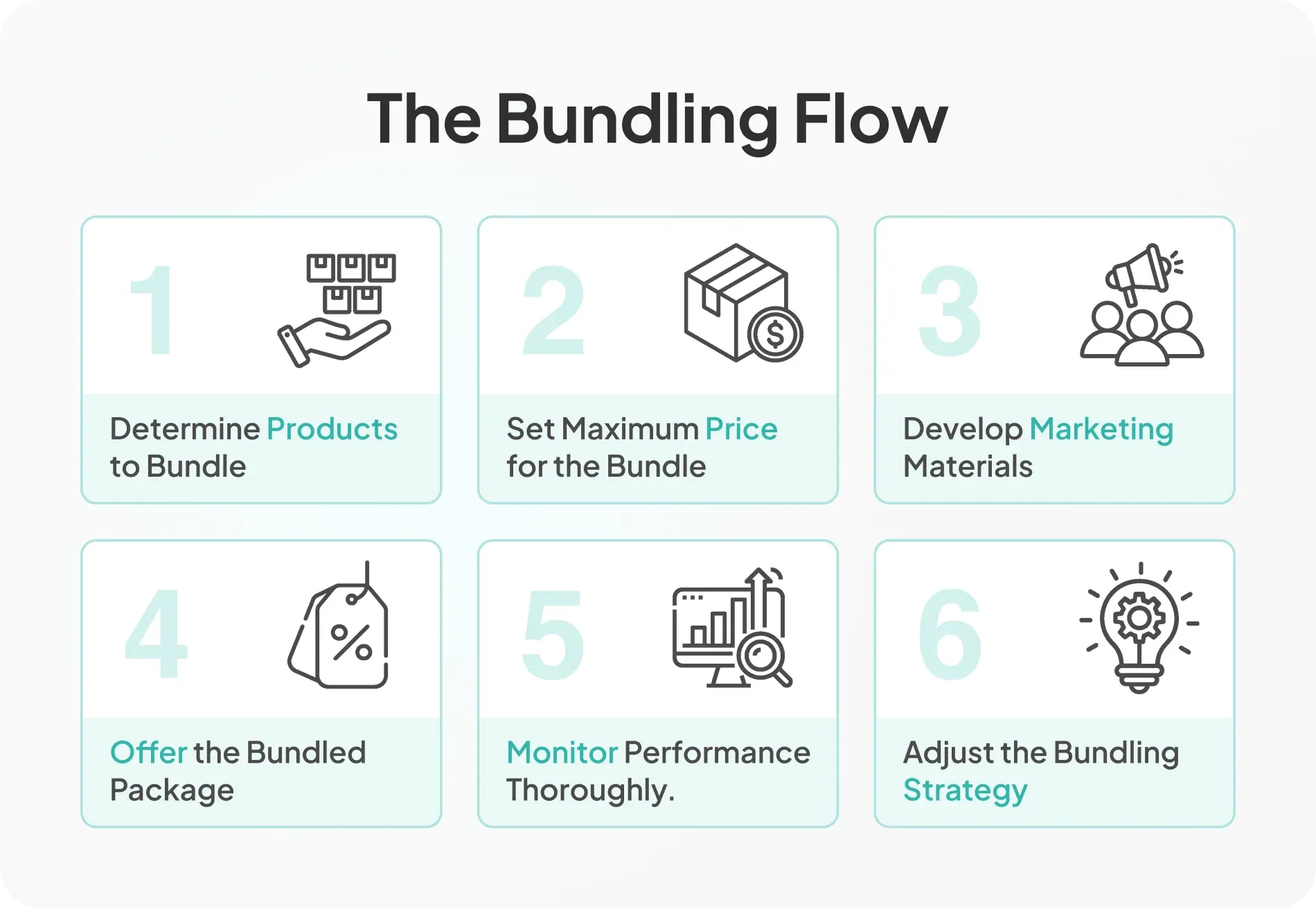
Pure bundling sells items only as a set. Customers can't buy the pieces individually. A "starter kit" with a cleanser, toner, and moisturizer sold as one SKU is a pure bundle. This works well for products that are genuinely better used together, like a skincare routine or a smart home starter kit with a hub, sensor, and plug.
Mixed bundling keeps individual products available while also offering the bundle at a discount. Most ecommerce bundling falls here. It lets price-sensitive shoppers buy one item while still giving everyone else a reason to add two more. Mixed bundling is lower risk for most stores, since it doesn't force a purchase decision the customer isn't ready to make.
Bundling Is a Cross-Sell Mechanic, Not an Upsell
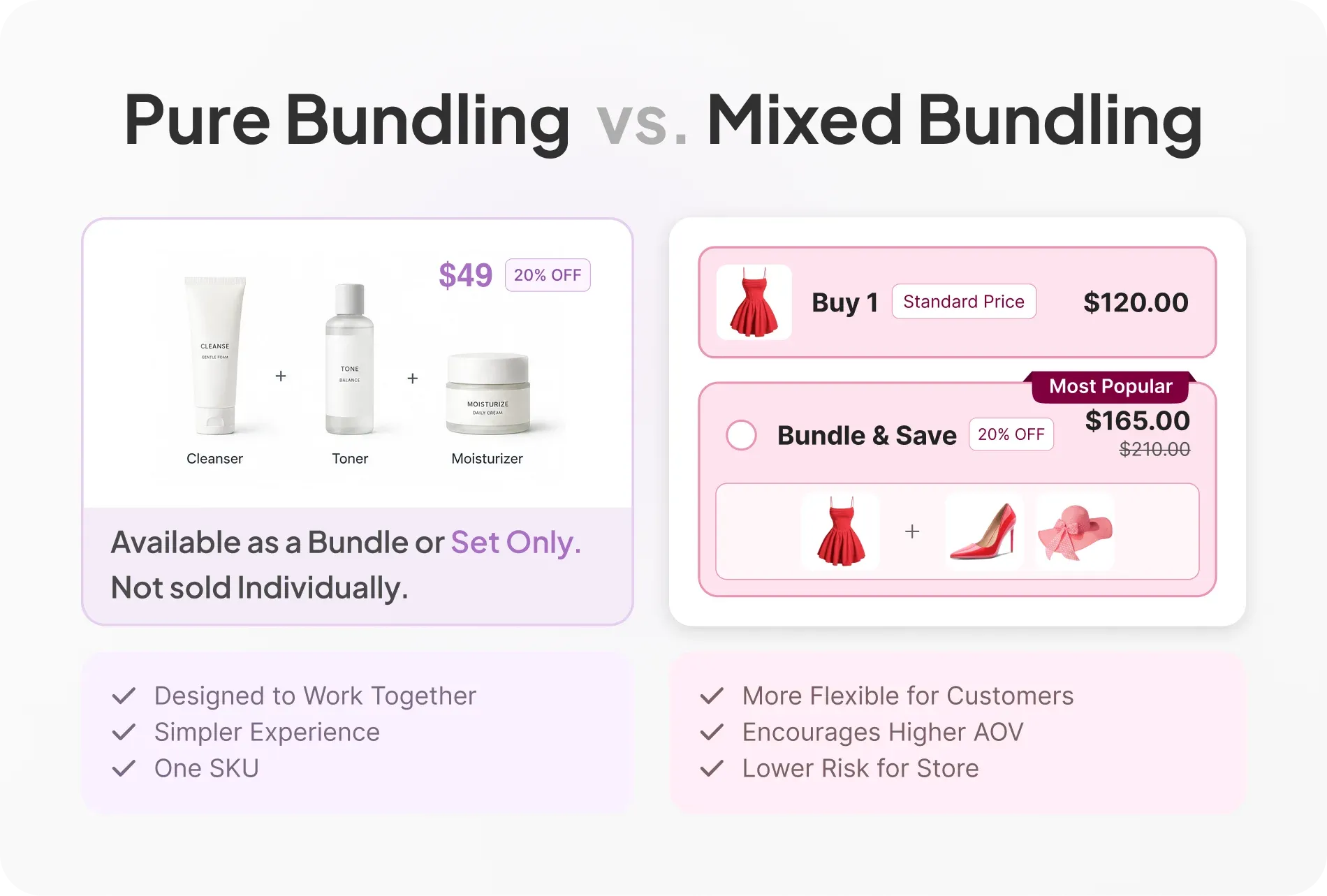
It's worth being precise about the mechanic, because the two get confused constantly. An upsell moves a customer to a more expensive version of the same product, a bigger size or a premium tier. A cross-sell adds a different, complementary product to the order. Bundling is almost always a cross-sell strategy: it doesn't ask the customer to spend more on the item they were already buying, it adds a second or third item alongside it.
That distinction matters for how you build the offer. Upsell logic works off "better." Cross-sell logic, and by extension bundle logic, works off "together." A quantity tier is a partial exception, since it does increase spend on the same product, but the moment a bundle includes a second SKU, gift, or add-on, it has shifted into cross-sell territory, and the messaging should reflect that: not "upgrade this," but "this pairs well with what's already in your cart."
Bundling vs. Discounting: The Core Difference
A discount code takes money off a price the customer already decided on. A bundle changes what the customer decides to buy in the first place. That distinction is why bundles tend to protect brand perception in a way discounts don't.
Constant discounting teaches shoppers that your "real" price is whatever the sale price is, and trains them to wait for the next one. A well-built bundle doesn't devalue your price. It reframes the purchase as "more for a bit more," not "less for less."
The Data: Why Bundling Outperforms Blanket Discounts
The numbers on bundling are consistent across research from multiple sources, and they tell a clear story: bundling grows both revenue and profit, not just order count.
Research from McKinsey found that effective bundling strategies increase revenue by 5 to 15% and can lift customer retention by as much as 30%, largely because bundles expose customers to more of a brand's catalog and raise the switching cost of leaving. Separate McKinsey-cited data shows brands implementing product bundles see roughly 20% sales increases paired with 30% profit gains, a combination that simple discounting methods struggle at.
Merchants running dedicated bundling tools report average order value gains in the 20 to 30% range, with some studies pointing to bundle buyers carrying up to 2.7 times higher lifetime value than customers who buy a single item. That LTV gap matters more than the AOV bump itself: bundle buyers tend to be higher-intent shoppers who are solving a problem, not just chasing a deal.
The category evidence backs this up too. Bundling has grown from a seasonal Shopify promotional strategy into a standing revenue driver, with some analyses estimating that up to 30% of ecommerce revenue now flows through bundled purchases in categories like beauty, supplements, and apparel.
Seven Product Bundling Strategies That Increase Revenue
Not every bundle format fits every product catalog. Below are the seven strategies that consistently move revenue, along with where each one works best and how to avoid the version that just becomes a disguised discount.
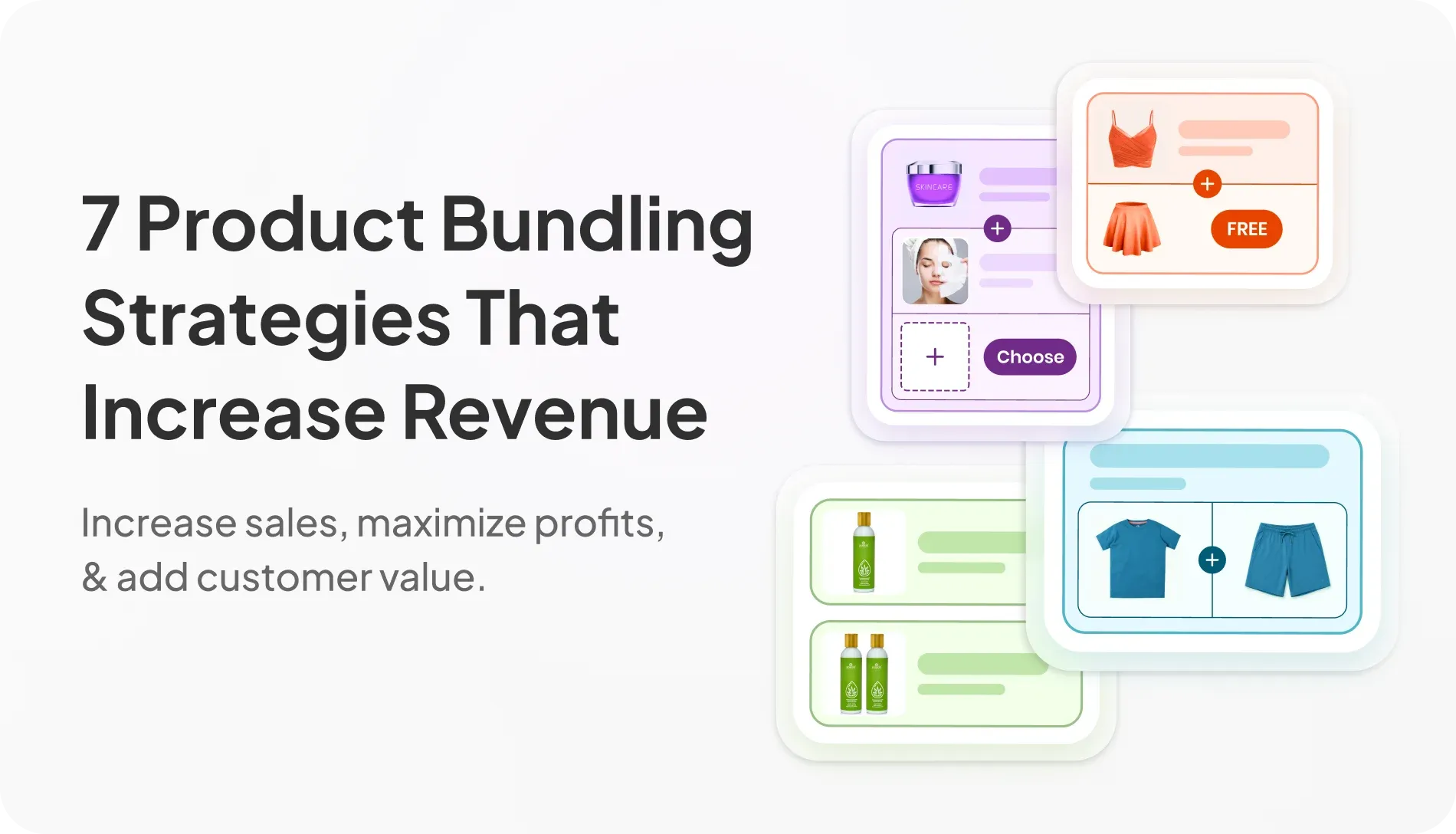
1. Quantity Tiers: Buy More, Save More
Quantity tiers reward customers for buying more units of the same product, with the discount increasing at each tier. Buy 2 and save 10%, buy 3 and save 15%, buy 5 and save 20%. The widget shows every tier side by side, so the customer can see exactly what they gain by adding one more unit.
This works best for consumables: supplements, skincare, coffee, candles, socks, anything a customer naturally goes through and reorders. The psychology is simple. Once someone has decided to buy a product, showing them a better deal for buying more of it is a much smaller decision than convincing them to buy an unrelated item.
A supplement brand selling a $30 bottle at "buy 3, save 15%" turns a $30 order into a $76.50 order from customers who were already going to reorder eventually. That's not a new customer decision. It's the same decision, made bigger.
With Pumper Bundles, this is the Quantity Breaks offer type (displayed to merchants as "Buy More Save More"). Merchants set unlimited tiers per product, and the widget renders directly on the product page through a Shopify Theme App Extension, with no theme code editing required.
2. BOGO Offers Structured for Margin, Not Just Volume
BOGO (Buy One Get One) is one of the oldest promotional mechanics, and one of the most misused. A flat "buy one get one 50% off" is mathematically a 25% discount on the total order, which puts it firmly in discount-trap territory if margins are thin.
The version that actually protects revenue is a structured BOGO tied to specific products or categories: buy a cleanser, get a travel-size toner free, or buy 2 get 2 on a specific bundle-friendly SKU. This lets you route customers toward complementary items or products you want to move, instead of applying the offer blindly across the whole catalog.
BOGO tends to outperform an equivalent percentage discount on perceived value, because "get one free" reads as a gift, while "50% off" reads as a calculation. Apparel and accessories brands see this work especially well, since pairing and gifting are natural purchase behaviors in those categories.
Pumper Bundles supports both BOGO free and BOGO at a percentage discount, including cross-product rules, so the "Get" item doesn't have to be the same SKU as the "Buy" item.
3. Free Gift With Purchase: The Threshold That Doesn't Feel Like a Discount
Free gift with purchase (GWP) is arguably the most underused AOV lever in ecommerce, and the data on it is striking. Free gift offers increase average order value by roughly 18 to 30% on average, and in some studies GWP campaigns outperform equivalent discount codes in conversion rate by 15 to 25%.
The reason comes down to behavioral economics, not math. A $15 discount and a $15 gift can cost the business the same amount, but they trigger different reactions. A discount makes customers calculate savings. A gift makes them feel like they got something extra. One is rational. The other is emotional, and emotional decisions tend to result in bigger carts.
The threshold matters as much as the gift itself. Set it too close to your current AOV and you give away margin on orders that would have happened anyway. Set it 25 to 35% above your current AOV, and you give shoppers a visible, achievable stretch goal, the same mechanic behind free shipping thresholds. A shopper who's $12 away from unlocking a free gift will very often add a $12 item to get there.
Pumper Bundles' Unlock Free Gifts offer type lets merchants set spend or quantity thresholds per tier, each unlocking a different gift, shown live in the widget with a "FREE" label so the incentive is visible while the customer is still browsing, not buried at checkout.
4. Subscribe and Save: Bundling Time Into the Offer
Subscription bundling doesn't combine products. It bundles a discount with a commitment to recurring delivery. The customer gets a lower price in exchange for choosing "Subscribe & Save" over "One-Time Purchase," and the store gets a predictable, recurring revenue stream instead of a single transaction.
This isn't a fit for every catalog, but for consumables and anything with a natural repeat-purchase cycle, meal replacement, skincare, pet food, coffee, wellness products, it turns a single sale into a stream of future ones. The revenue impact compounds: even a modest per-order discount is offset many times over by the customer placing that same order automatically every month instead of churning after one purchase.
Subscription mechanics also raise switching costs. Once a shopper has a recurring order set up, the friction of cancelling and shopping elsewhere works in the brand's favor, the same effect that keeps people subscribed to bundled streaming services long after they've stopped watching half the content.
Pumper Bundles' Subscribe & Save offer type adds this toggle directly to the product page widget, letting shoppers compare one-time and recurring pricing side by side before they decide.
5. Mix-and-Match Bundles: Letting Customers Build Their Own Deal
Mix-and-match bundling gives shoppers a "choose your own" bundle experience: pick any 3 of 8 eligible products for a set price, or build a 6-pack from a curated list. This works because it removes the two biggest bundle objections at once. The customer isn't stuck with items they don't want, and they're not doing complicated mental math on individual discounts.
This format performs especially well in categories with a lot of flavor, scent, or color variation, like candles, snack brands, or skincare lines with multiple product types. The customer feels in control of the outcome, which increases perceived value even when the underlying discount is modest.
The build-your-own format also naturally increases basket size, since most mix-and-match offers require a minimum quantity to unlock the bundle price, nudging shoppers past what they'd have bought browsing product-by-product.
Pumper Bundles' Bundle & Save offer type uses a "Choose Product" picker for exactly this use case, letting merchants define eligible products, minimum bundle size, and combined pricing without writing code.
6. Curated Starter Kits and Pure Bundles
Where mix-and-match hands the customer control, curated kits do the opposite: the brand pre-selects the ideal combination and sells it as one unit, at one price. A "complete routine" skincare kit, a "content creator kit" with a camera, mic, and light, or a "starter set" for a new product category are all pure bundles.
The value here isn't just a discount. It's decision-making done for the customer. Shoppers who are new to a category, or who don't want to research which items pair well, will often pay a premium for a kit that removes the guesswork. This is one of the few bundle formats where you can charge closer to full combined price and still convert well, because the value is convenience, not savings.
Curated kits also work well as a new-customer acquisition tool. Roughly 80% of consumers respond well to first-purchase incentives, and a welcome bundle combining bestsellers at a modest discount creates a strong first impression while establishing a higher starting order value than a single-item first purchase would.
7. Post-Purchase Bundles: The Next Frontier
Every strategy above happens before checkout. Post-purchase upsells happen in the moment right after a customer has already committed to buying, on the order confirmation or thank-you page, when they've just proven purchase intent but haven't left the site yet.
This window converts differently than on-page offers because the buying decision is already made. The customer isn't asking "should I buy," only "should I add one more thing." Post-purchase offers commonly convert in the mid-single-digit to low double-digit percentage range, entirely incremental to the original order, since the sale is locked in before the offer even appears.
Pumper Bundles is expanding into this moment with a post-purchase offer feature currently in development. Full details aren't public yet, but the direction is clear: extending Pumper's existing tiered, gift, and bundle mechanics into the post-checkout moment, so merchants capture incremental revenue they're currently leaving on the table between "order confirmed" and the next site visit. Merchants already using Pumper's pre-purchase offer types will be first in line once it ships.
Also Read: The Complete Shopify Merchandising Playbook: How High-Growth Brands Increase Revenue
Real-World Examples of Bundling Done Right
Theory is easier to trust with real examples behind it. A few well-documented cases show what happens when bundling is treated as a purchase-decision redesign instead of a disguised discount.
The Console-and-Games Bundle
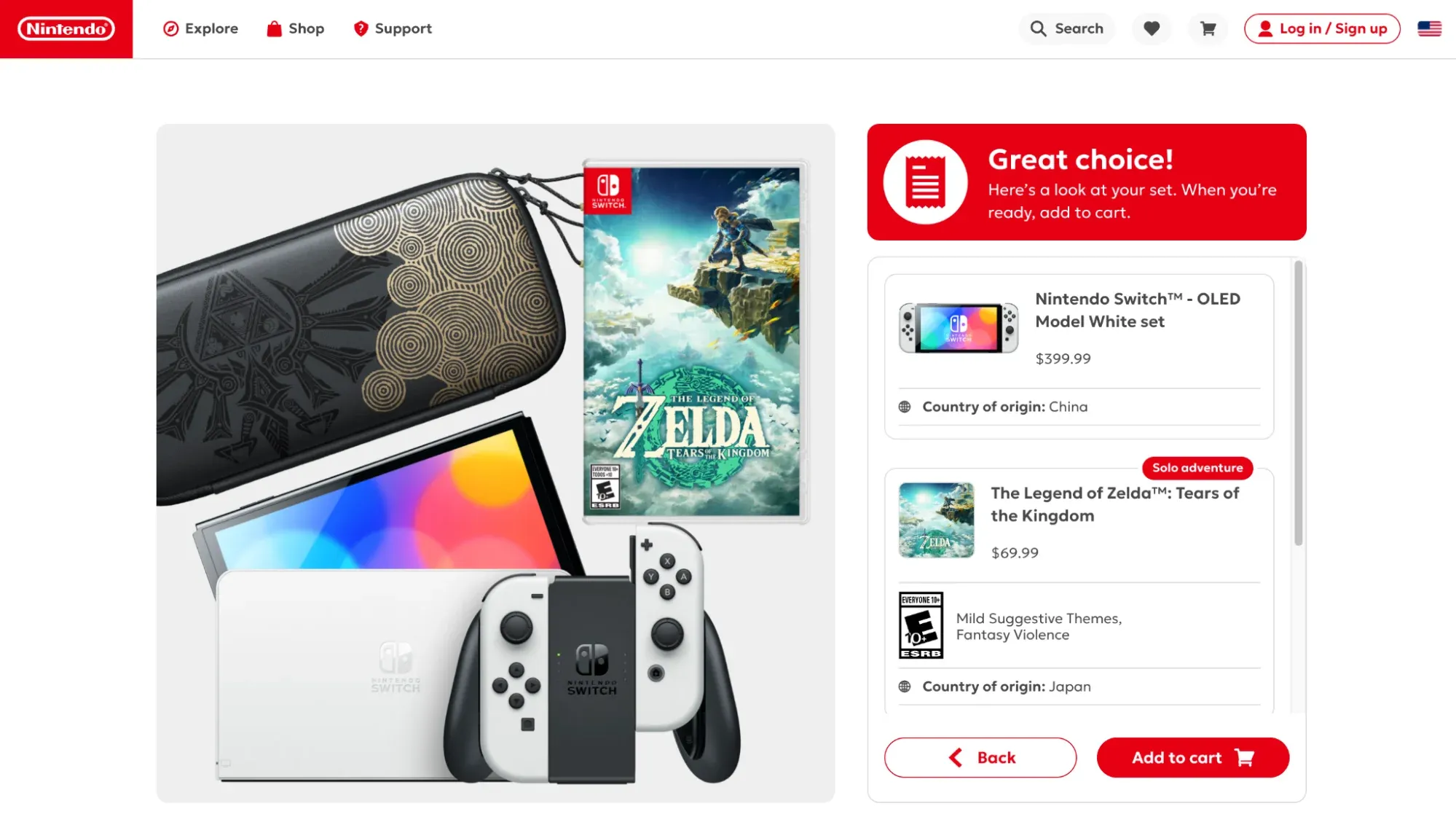
When Nintendo packaged its console with a handful of games as a single mixed bundle rather than selling the hardware alone, unit sales climbed by more than a million units, according to research cited by Harvard Business School. The console itself wasn't cheaper. The bundle simply made the decision to buy games at the same time feel like part of the same purchase, not a separate one made later, if at all.
The Fast-Food Value Meal
The quick-service restaurant industry figured this out decades before ecommerce did. A burger, fries, and drink sold as a "meal" for slightly less than buying all three separately isn't really a discount strategy. It's a bundling strategy: almost nobody who walks in for "just a burger" would order fries and a drink on their own, but bundled into one decision, most people do. The combined ticket ends up bigger than the sum of what customers intended to buy.
The Subscription Stack
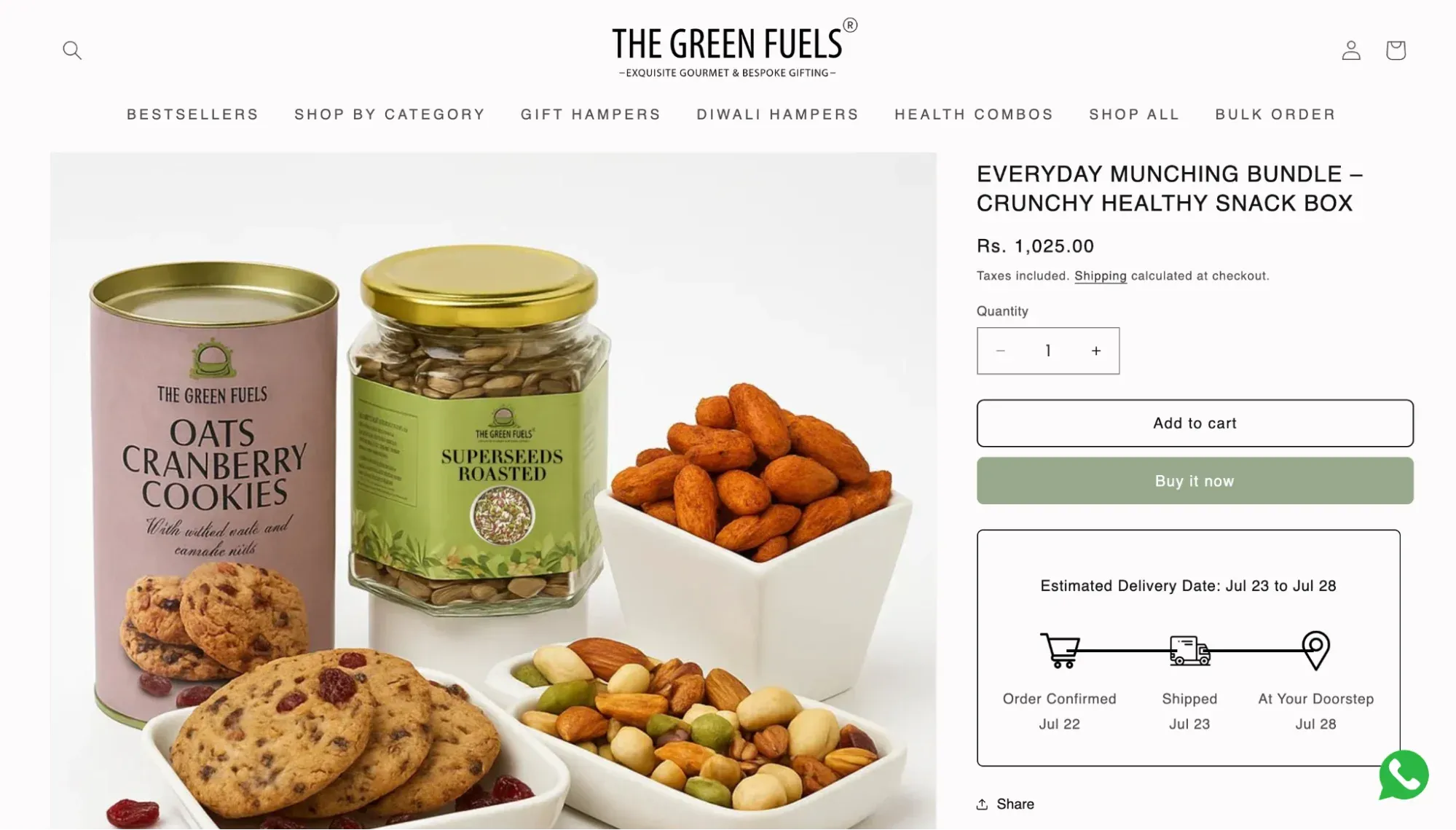
Streaming bundles work the same way GWP and Subscribe & Save mechanics work in ecommerce. Bundling multiple subscription services into one recurring charge raises the combined price a customer pays each month, while lowering the odds they cancel any single piece of it, since cancelling now means giving up the whole bundle, not just one underused service. The retention effect compounds over the life of the subscription in a way a one-time discount never can.
The Skincare Routine Kit
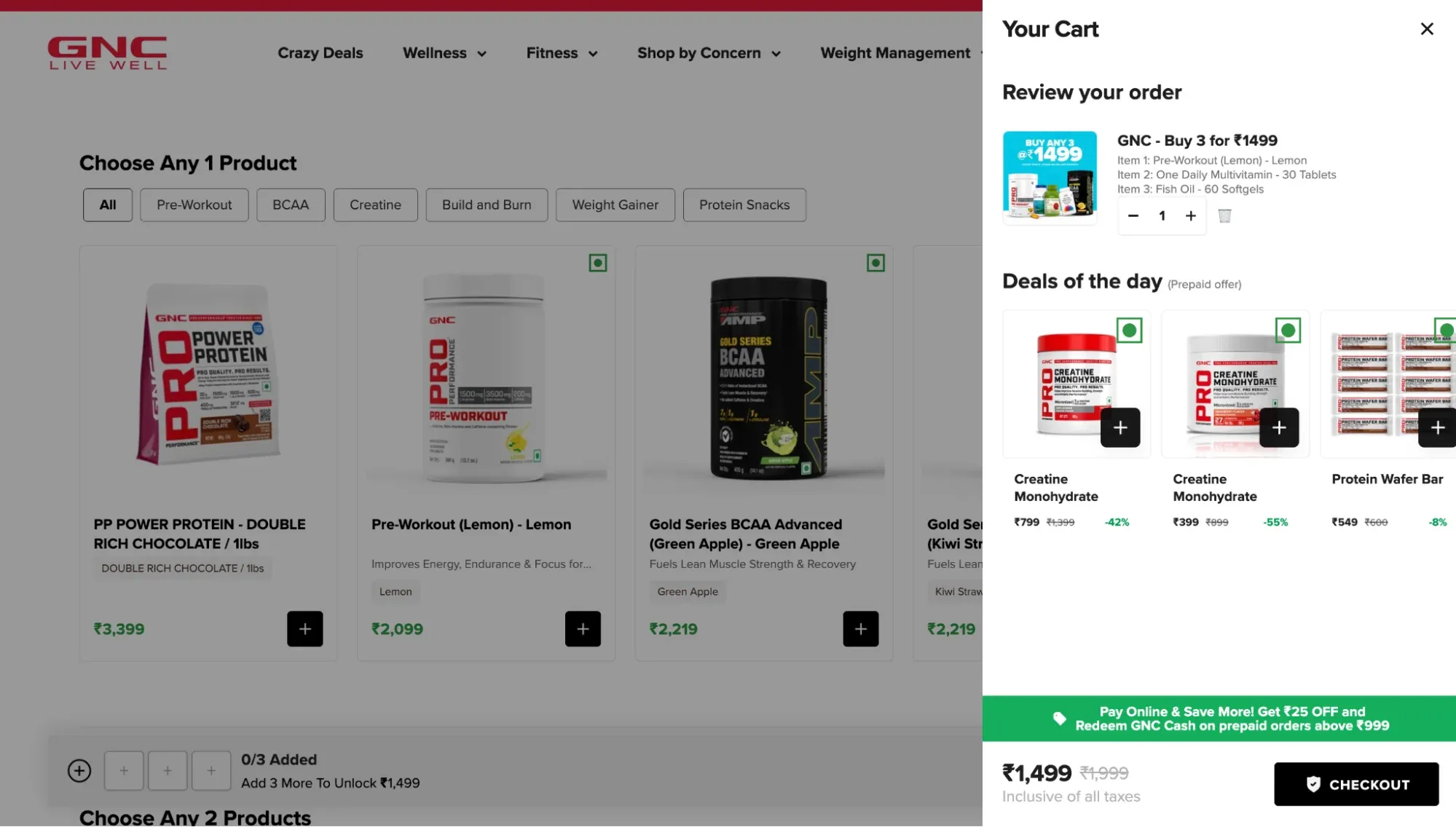
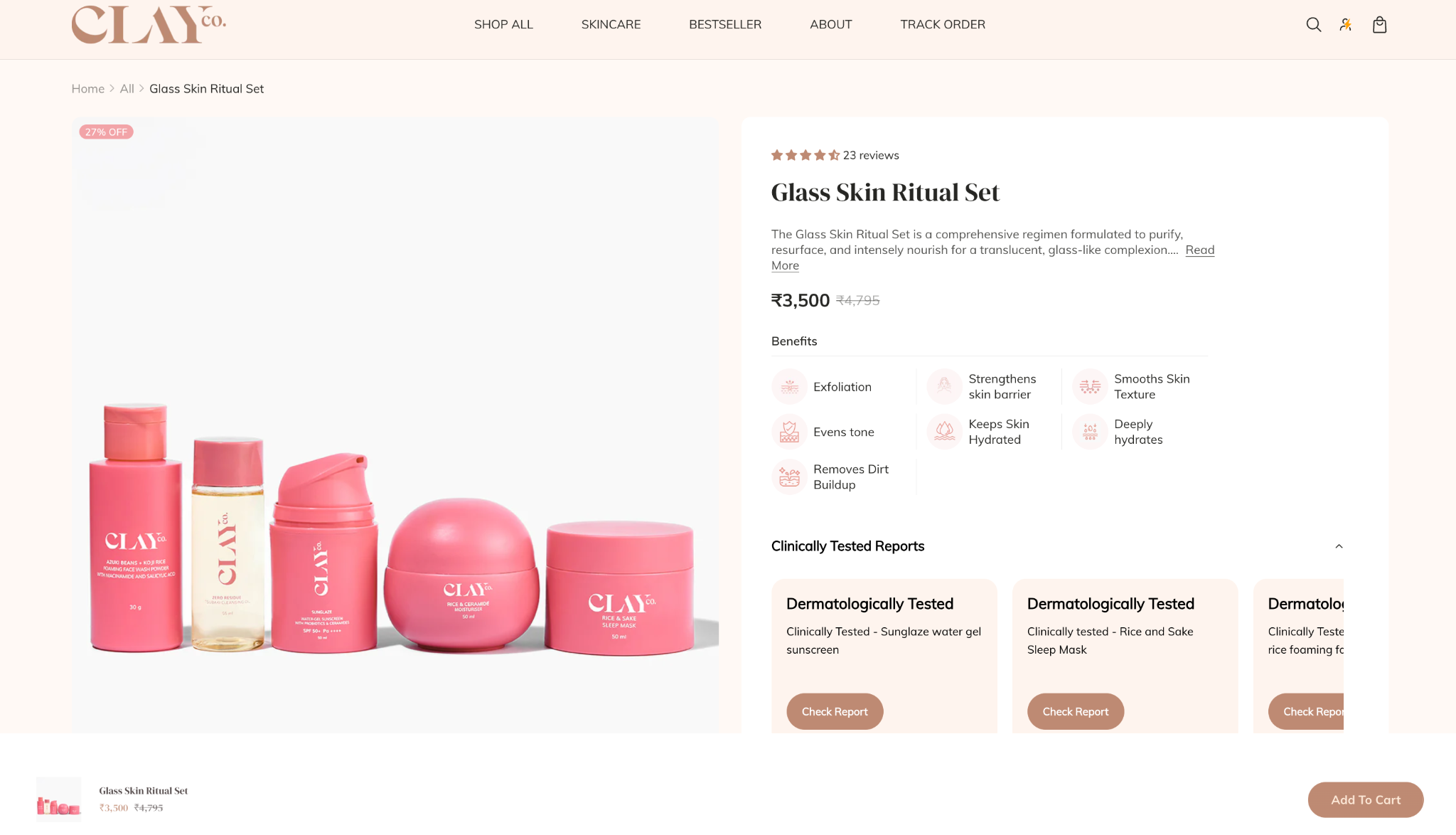
Beauty and skincare brands consistently show some of the strongest bundle lift in ecommerce, largely because their products are genuinely meant to be used together. A curated routine kit (cleanser, serum, moisturizer) sold as one SKU removes the research burden from a new customer while increasing order value well beyond what a single-product first purchase would look like. This is the curated-kit strategy from earlier in this guide, and it's one of the most consistently cited examples of pure bundling performing well with new, less category-confident buyers.
How to Choose the Right Bundle Strategy for Your Catalog
Start with how your products are actually purchased, not with which tactic looks most popular on social media. Consumables that get reordered fit quantity tiers and subscriptions. Complementary items that solve one problem together fit curated kits. Broad catalogs with a lot of variation fit mix-and-match. Match the mechanic to the buying behavior first, and the conversion numbers tend to follow.
A Quick Reference by Product Type
If you sell consumables like supplements, skincare, or coffee, quantity tiers and Subscribe & Save will outperform almost anything else, since the customer is already planning to reorder. If you sell apparel or accessories, BOGO and free gift thresholds tend to convert best, because pairing and gifting are natural behaviors in that category. If you sell items that are genuinely better used together, a starter kit or curated bundle removes decision fatigue for new customers. If your catalog has a lot of variety within one category, like flavors, scents, or colors, mix-and-match gives shoppers control without complicating the page.
Start With One Offer, Not Five
Run one offer type at a time before layering more. A single well-configured Buy More Save More offer with clear tiers will outperform three half-configured offers competing for the same product page real estate. Watch your analytics for two weeks before adding a second offer type, and check whether the bundle is actually lifting AOV or just shifting which product line gets the credit for a sale that would have happened anyway.
Common Bundling Mistakes That Quietly Erode Revenue
Bundling only works when it's designed with margin in mind, and a few mistakes show up constantly across merchants who don't see the results they expected.
1. Discounting Too Deep
A bundle discount above roughly 30% starts behaving like a blanket sale rather than a value-add, and it's unsustainable unless it's offset by a genuine increase in units per order.
2. Bundling Unrelated Products
A bundle only feels like a good deal if the items make sense together. Pairing a bestseller with dead stock that has no relationship to it reads as a clearance tactic, not a curated offer, and shoppers notice the difference.
3. Offering Too Many Bundle Types at Once
Presenting five different offer formats on one product page creates choice paralysis, the same effect that tanks conversion when checkout shows too many upsell options. One or two clearly presented offers, matched to that specific product, will convert better than a page cluttered with every mechanic available.
4. Not Tracking the Right Metric
AOV going up means nothing if conversion rate drops by more. The metric that actually matters is total revenue per visitor, or better, extra revenue generated above what the baseline order would have been without the offer.
5. Setting the Threshold at the Wrong Point
This one is specific to free gift and free shipping style offers. A threshold set too close to your current AOV gives away margin on orders that would have happened anyway. A threshold set too far above it feels unreachable and the customer disengages instead of stretching. The reliable starting point is 25 to 35% above your current average order value, adjusted after a couple of weeks of real data.
6. Letting the Discount Stack Invisibly With Other Promotions
A bundle offer combined with a sitewide discount code, a loyalty reward, and a free shipping threshold can silently compound into an order that loses money, even though each individual promotion looked reasonable on its own. Decide up front whether bundle pricing should stack with other discounts, and check that decision periodically as new promotions get added to the store.
How Pumper Bundles Makes This Easy to Execute
Every strategy in this guide requires the same underlying capability: the ability to configure tiered pricing, free gifts, BOGO rules, subscriptions, and build-your-own bundles on product pages, without editing theme code or hiring a developer.
That's the entire premise behind Pumper Bundles, a Shopify app built by Proveway with the tagline "Built for brands that want bigger orders." It covers all seven pre-purchase strategies from this guide as distinct, configurable offer types:
- Buy More Save More (Quantity Breaks) for tiered volume discounts
- BOGO Offers for buy X get Y, including cross-product rules
- Unlock Free Gifts for threshold-based gift-with-purchase campaigns
- Subscribe & Save for recurring-purchase pricing
- Bundle & Save for mix-and-match, build-your-own bundles
Every offer installs through Shopify's native Theme App Extensions, meaning the widget appears on the product page the moment the app block is turned on in the theme editor, with no code changes and no risk of breaking the theme. Widget copy is fully translatable across 11 languages with an auto-translate option, and every offer includes a built-in analytics dashboard tracking impressions, add-to-cart rate, orders, extra revenue, and conversion rate, so merchants can measure exactly what this guide recommends: revenue impact, not just sales volume.
Pricing is structured around the same principle this guide has covered throughout. Plans are capped by the extra revenue Pumper generates for a store, not by the number of offers or features a merchant can use. A free plan is available for stores just getting started, with paid plans scaling as the app generates more measurable revenue, backed by a 7-day free trial.
That growth-aligned pricing model is worth sitting with for a second. Most apps charge a flat fee regardless of results. Pumper's plan tiers are set by how much extra revenue the app has actually generated, which means the cost of the tool scales in the same direction as the return it's producing, rather than being a fixed line item you have to justify every month regardless of performance.
Turning This Into a Revenue Plan, Not Just a Sale
The stores that grow AOV sustainably aren't the ones running the deepest discounts. They're the ones that redesign the purchase decision itself, so buying more feels like the obvious choice rather than a markdown shoppers wait for.
Pick one strategy from this guide that matches your best-selling product. If you sell consumables, start with quantity tiers. If you sell complementary items, start with a curated kit or free gift threshold. Configure it, give it two weeks of real traffic, and measure extra revenue, not just units sold. That single test will tell you more about what actually grows your store than another sitewide discount ever will.
Want to set the best Shopify product bundles in your store? Try Pumper Bundles for free today!
Frequently Asked Questions About Shopify Product Bundling
Does product bundling actually increase revenue, or just order count?
Done correctly, it increases both, but revenue is the metric that matters. A bundle only counts as a win if the total dollar amount per order goes up by more than the discount given away. That's why tracking extra revenue, not just AOV or units sold, is the real test of whether a bundle is working.
What's the ideal discount to offer inside a bundle?
Most bundles that protect margin stay under a 30% combined discount, and many of the highest-performing ones sit closer to 10 to 20%. Once the discount climbs past 30%, the offer starts behaving like a blanket sale rather than a value-add, and it usually needs a much bigger lift in units to stay profitable.
Is BOGO better than a percentage-off bundle?
Neither is universally better. BOGO tends to win on perceived value, since "get one free" feels like a gift rather than a calculation. Percentage-off tiers tend to win on flexibility, since they scale cleanly across any quantity. The right choice depends on the product category and whether the goal is perceived generosity or straightforward volume discounting.
How is a free gift with purchase different from a discount?
Mathematically, a $15 gift and a $15 discount can cost a business the same amount. Psychologically, they're not the same offer. A discount makes customers calculate what they saved. A gift makes them feel like they received something extra, which tends to produce a stronger emotional response and a higher take rate on the same spend threshold.
Can bundling work on a store with only a handful of products?
Yes. Quantity tiers and Subscribe & Save both work on a single product with no catalog breadth required at all. Mix-and-match and curated kits need at least a few complementary SKUs, but even a two- or three-product catalog can support a simple "buy more, save more" tier structure from day one.